


- Afhalen na 1 uur in een winkel met voorraad
- Gratis thuislevering in België vanaf € 30
- Ruim aanbod met 7 miljoen producten
- Afhalen na 1 uur in een winkel met voorraad
- Gratis thuislevering in België vanaf € 30
- Ruim aanbod met 7 miljoen producten





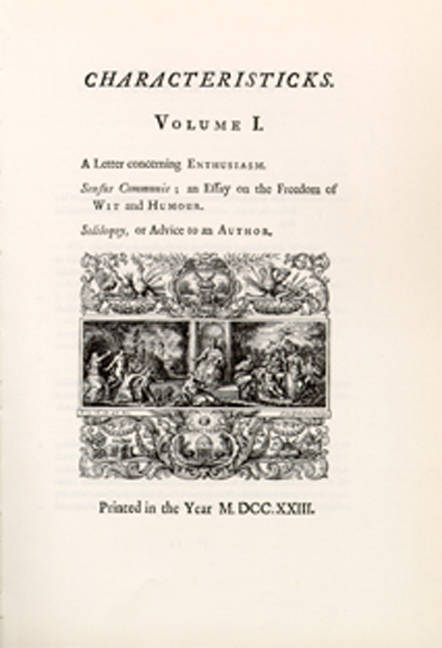
Shaftesbury (Anthony Ashley Cooper): Standard Edition / I. Works: Aesthetics. Band 1
Soliloquy: or, Advice to an Author / Selbstgespräch oder Ratschlag an einen Autor. A Letter concerning Enthusiasm / Ein Brief über den Enthusiasmus. The Adept Ladys ... In a Letter to a Brother / Die eingeweihten Damen ... In einem Brief an einen Bruder.
Anthony A. C. Shaftesbury
€ 324,45
+ 648 punten
Omschrijving
In 'Soliloquy', the last of the essays to be published separately before their joint appearance as 'Characteristicks', Shaftesbury discusses the importance of critical self-knowledge. The form of soliloquy or self-communion advocated is more than simply the means by which such self-illumination can be achieved: it must be one of the first principles of the enlightened mind. Writers especially are to adopt the self-discoursive approach and, by demonstrating it without dogmatism in letters, essays, and dialogues, encourage in their readers a free and critical attitude towards themselves and the world. - The two epistolary pieces, 'A Letter concerning Enthusiasm' and 'The Adept Ladies' (the text of the latter is edited here for the first time in full), were both written with the behaviour of contemporary religious sects in mind; the 'Letter' is, more specifically, a response to the disturbing fervour generated in London by the French Prophets or Camisards, a group of Protestants who had fled to England from the Cévennes.
Specificaties
Betrokkenen
- Auteur(s):
- Vertaler(s):
- Uitgeverij:
Inhoud
- Taal:
- Duits, Engels
- Reeks:
Eigenschappen
- Productcode (EAN):
- 9783772807572
- Uitvoering:
- Hardcover
- Formaat:
- Linnen over kaft
- Afmetingen:
- 179 mm x 252 mm
- Gewicht:
- 1100 g


Alleen bij Standaard Boekhandel
+ 648 punten op je klantenkaart van Standaard Boekhandel
Cadeau

AANGERADEN


Beoordelingen
We publiceren alleen reviews die voldoen aan de voorwaarden voor reviews. Bekijk onze voorwaarden voor reviews.