



Bedankt voor het vertrouwen het afgelopen jaar! Om jou te bedanken bieden we GRATIS verzending (in België) aan op alles gedurende de hele maand januari.
- Afhalen na 1 uur in een winkel met voorraad
- In januari gratis thuislevering in België
- Ruim aanbod met 7 miljoen producten
Bedankt voor het vertrouwen het afgelopen jaar! Om jou te bedanken bieden we GRATIS verzending (in België) aan op alles gedurende de hele maand januari.
- Afhalen na 1 uur in een winkel met voorraad
- In januari gratis thuislevering in België
- Ruim aanbod met 7 miljoen producten





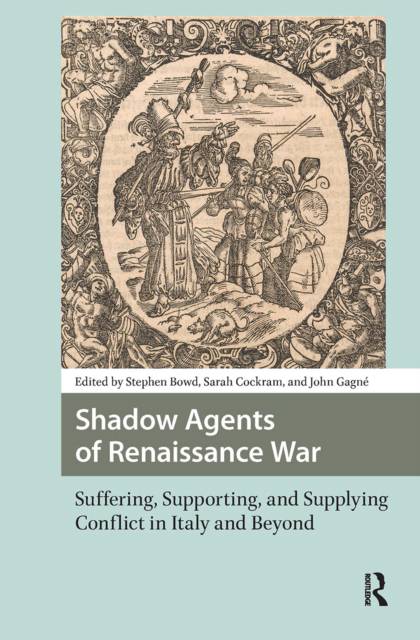
Shadow Agents of Renaissance War
Suffering, Supporting, and Supplying Conflict in Italy and Beyond
€ 213,95
+ 427 punten
Omschrijving
Who were the shadow agents of Renaissance war? In this pioneering collection of essays scholars use new archival evidence and other sources, including literature, artworks, and other non-textual material, to uncover those men, women, children and other animals who sustained war by means of their preparatory, auxiliary, infrastructural, or supplementary labour. These shadow agents worked in the zone between visibility and invisibility, often moving between civilians and soldiers, and their labour was frequently forced. This volume engages with a range of important debates including: the relationship between war and state formation; the 'military revolution' or transformation of early modern military force; the nature of human and non-human agency; gender and war; civilian protection and expulsion; and espionage and diplomacy. The focus of the volume is on Italy, but it includes studies of France and England, and the editors place these themes in a broader European context with the aim of supporting and stimulating research in this field.
Specificaties
Betrokkenen
- Uitgeverij:
Inhoud
- Aantal bladzijden:
- 334
- Taal:
- Engels
- Reeks:
Eigenschappen
- Productcode (EAN):
- 9789463721356
- Verschijningsdatum:
- 22/01/2023
- Uitvoering:
- Hardcover
- Formaat:
- Genaaid
- Afmetingen:
- 156 mm x 234 mm
- Gewicht:
- 644 g


Alleen bij Standaard Boekhandel
+ 427 punten op je klantenkaart van Standaard Boekhandel
SOLDEN


Beoordelingen
We publiceren alleen reviews die voldoen aan de voorwaarden voor reviews. Bekijk onze voorwaarden voor reviews.