


- Afhalen na 1 uur in een winkel met voorraad
- Gratis thuislevering in België vanaf € 30
- Ruim aanbod met 7 miljoen producten
- Afhalen na 1 uur in een winkel met voorraad
- Gratis thuislevering in België vanaf € 30
- Ruim aanbod met 7 miljoen producten




€ 54,95
+ 109 punten
Uitvoering
Omschrijving
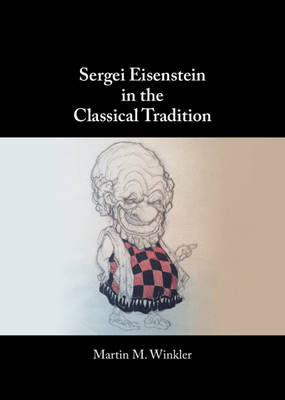
This is the first study of Sergei Eisenstein's relationship to classical antiquity. Eisenstein regarded the cinema as a Gesamtkunstwerk and considered the ancient Greeks among its ancestors. He detected what he called "cinematism" in Homer, the Laocoon sculpture group, the Acropolis, and elsewhere. The book interprets Eisenstein's chief concept, montage, as a visual analogy to clever juxtapositions in Roman poetry and examines his conflicts with Stalin and the Communist Party over Bezhin Meadow and Ivan the Terrible alongside the classical rhetorical strategy of formidable speaking in the face of absolute power and the Russian practice of Aesopian language. Eisenstein also influenced the design of the New Acropolis Museum via an essay about the Acropolis' architectural promenade and his epic Alexander Nevsky. The cinematism of the Parthenon Frieze, American cinema architecture modeled on the Parthenon, and Eisenstein's image of the cinema as a temple reinforce his importance within the classical tradition.
Specificaties
Betrokkenen
- Auteur(s):
- Uitgeverij:
Inhoud
- Aantal bladzijden:
- 448
- Taal:
- Engels
Eigenschappen
- Productcode (EAN):
- 9781009761772
- Verschijningsdatum:
- 30/09/2026
- Uitvoering:
- Paperback
- Formaat:
- Trade paperback (VS)
- Gewicht:
- 25 g


Alleen bij Standaard Boekhandel
+ 109 punten op je klantenkaart van Standaard Boekhandel
Cadeau

AANGERADEN


Beoordelingen
We publiceren alleen reviews die voldoen aan de voorwaarden voor reviews. Bekijk onze voorwaarden voor reviews.