


- Afhalen na 1 uur in een winkel met voorraad
- Gratis thuislevering in België vanaf € 30
- Ruim aanbod met 7 miljoen producten
- Afhalen na 1 uur in een winkel met voorraad
- Gratis thuislevering in België vanaf € 30
- Ruim aanbod met 7 miljoen producten




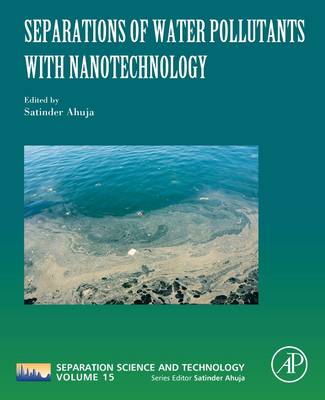
Separations of Water Pollutants with Nanotechnology
Volume 15
€ 390,45
+ 780 punten
Omschrijving
Separations of Water Pollutants with Nanotechnology, the latest volume in the Separation Science and Technology series, offers new solutions for remediating water pollution utilizing nanomaterials with separation methods. Current water purification methods are unsuitable, inconvenient or expensive, so there is a need for new and better processes and techniques. Nanomaterials can purify water by removing pollutants such as heavy metals, pathogens, organic compounds, inorganic compounds, pharmaceuticals, and chemicals of emerging concern. These can effectively replace membrane-based methods if the right expertise is developed--this book helps separation scientists do just that. Existing water treatment problems can be solved by applying a nanotechnology-based processes: antimicrobial nanotechnology, zero-valent iron nanoparticles, nanoadsorbents, nano-enhanced membranes, nanometal oxides, and nano photocatalysts. The current literature places emphasis on materials chemistry rather than the separation methods used for water purification. This new volume presents a collection of chapters that deal with remediation based on separation chemistry.
Specificaties
Betrokkenen
- Uitgeverij:
Inhoud
- Aantal bladzijden:
- 318
- Taal:
- Engels
- Reeks:
- Reeksnummer:
- nr. 15
Eigenschappen
- Productcode (EAN):
- 9780323907637
- Verschijningsdatum:
- 29/04/2022
- Uitvoering:
- Paperback
- Formaat:
- Trade paperback (VS)
- Afmetingen:
- 216 mm x 279 mm
- Gewicht:
- 739 g

Alleen bij Standaard Boekhandel
+ 780 punten op je klantenkaart van Standaard Boekhandel
AANGERADEN


Beoordelingen
We publiceren alleen reviews die voldoen aan de voorwaarden voor reviews. Bekijk onze voorwaarden voor reviews.