


- Afhalen na 1 uur in een winkel met voorraad
- Gratis thuislevering in België vanaf € 30
- Ruim aanbod met 7 miljoen producten
- Afhalen na 1 uur in een winkel met voorraad
- Gratis thuislevering in België vanaf € 30
- Ruim aanbod met 7 miljoen producten





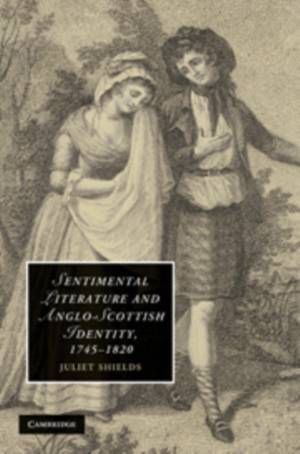
Sentimental Literature and Anglo-Scottish Identity, 1745-1820
Juliet Shields
€ 172,95
+ 345 punten
Uitvoering
Omschrijving
What did it mean to be British, and more specifically to feel British, in the century following the parliamentary union of Scotland and England? Juliet Shields departs from recent accounts of the Romantic emergence of nationalism by recovering the terms in which eighteenth- and early nineteenth-century writers understood nationhood. She argues that in the wake of the turmoil surrounding the Union, Scottish writers appealed to sentiment, or refined feeling, to imagine the nation as a community. They sought to transform a Great Britain united by political and economic interests into one united by shared sympathies, even while they used the gendered and racial connotations of sentiment to differentiate sharply between Scottish, English, and British identities. By moving Scotland from the margins to the center of literary history, the book explores how sentiment shaped both the development of British identity and the literature within which writers responded creatively to the idea of nationhood.
Specificaties
Betrokkenen
- Auteur(s):
- Uitgeverij:
Inhoud
- Aantal bladzijden:
- 238
- Taal:
- Engels
- Reeks:
- Reeksnummer:
- nr. 86
Eigenschappen
- Productcode (EAN):
- 9780521190947
- Verschijningsdatum:
- 24/06/2010
- Uitvoering:
- Hardcover
- Formaat:
- Genaaid
- Afmetingen:
- 155 mm x 229 mm
- Gewicht:
- 521 g


Alleen bij Standaard Boekhandel
+ 345 punten op je klantenkaart van Standaard Boekhandel
Cadeau

AANGERADEN


Beoordelingen
We publiceren alleen reviews die voldoen aan de voorwaarden voor reviews. Bekijk onze voorwaarden voor reviews.