


- Afhalen na 1 uur in een winkel met voorraad
- Gratis thuislevering in België vanaf € 30
- Ruim aanbod met 7 miljoen producten
- Afhalen na 1 uur in een winkel met voorraad
- Gratis thuislevering in België vanaf € 30
- Ruim aanbod met 7 miljoen producten





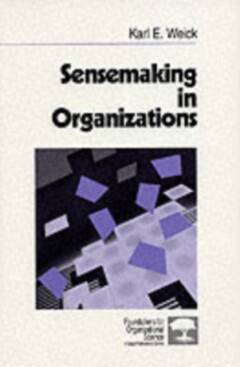
Sensemaking in Organizations
Karl E Weick
€ 196,45
+ 392 punten
Omschrijving
Finalist for the George Terry Award sponsored by the Academy of Management "This lovely and important book is the clearest, most complete, and interesting statement of sensemaking in organizations available. . . . It will have an impact on both new and experienced scholars." --Bob Sutton, Stanford University "Weick is artful. He masterfully constructs the sensemaking theoretical framework so that it can be better understood by the general scholar and in the process provides the reader with the sensemaking experience." --Kathleen Sutcliffe, University of Minnesota The teaching of organization theory and the conduct of organizational research have been dominated by a focus on decision making and the conception of strategic rationality. The rational model, however, ignores the inherent complexity and ambiguity of real-world organizations and their environments. Karl E. Weick′s new landmark volume, Sensemaking in Organizations, highlights how the "sensemaking" process--the creation of reality as an ongoing accomplishment that takes form when people make retrospective sense of the situations in which they find themselves--shapes organizational structure and behavior. Some of the topics Weick thoroughly covers are the concept, uniqueness, historical roots, varieties and occasions, general properties, and the future of sensemaking research and practice. Expertly written, Sensemaking in Organizations is the volume that students, scholars, and professors of organization and management studies must have.
Specificaties
Betrokkenen
- Auteur(s):
- Uitgeverij:
Inhoud
- Aantal bladzijden:
- 248
- Taal:
- Engels
- Reeks:
- Reeksnummer:
- nr. 3
Eigenschappen
- Productcode (EAN):
- 9780803971776
- Verschijningsdatum:
- 31/05/1995
- Uitvoering:
- Paperback
- Formaat:
- Trade paperback (VS)
- Afmetingen:
- 163 mm x 234 mm
- Gewicht:
- 412 g


Alleen bij Standaard Boekhandel
+ 392 punten op je klantenkaart van Standaard Boekhandel
Cadeau

AANGERADEN


Beoordelingen
We publiceren alleen reviews die voldoen aan de voorwaarden voor reviews. Bekijk onze voorwaarden voor reviews.