


- Afhalen na 1 uur in een winkel met voorraad
- Gratis thuislevering in België vanaf € 30
- Ruim aanbod met 7 miljoen producten
- Afhalen na 1 uur in een winkel met voorraad
- Gratis thuislevering in België vanaf € 30
- Ruim aanbod met 7 miljoen producten





Omschrijving
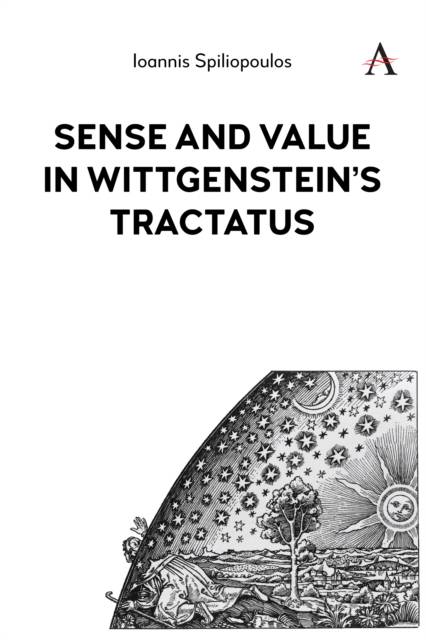
Offers a comprehensive interpretation of Wittgenstein's Tractatus Logico-Philosophicus, examining its analysis of language and logic alongside its concluding reflections on ethics and value.
The book offers a comprehensive interpretation of Ludwig Wittgenstein's Tractatus Logico-Philosophicus and other early writings, including the Notebooks and the Lecture on Ethics, with a particular focus on their treatment of ethics and value.
The study is structured in two interrelated parts and guided by an interpretive framework that distinguishes, within the Tractatus, a central core from its subsequent applications. This core culminates in proposition 6, where Wittgenstein introduces the notion of the general propositional form and completes his account of language and logic. Propositions 6 to 6.5 then extend this result by applying it to types of propositions traditionally taken to express necessary truths, thereby showing them to lack sense.
The first part is devoted to elucidating the central core of the work, concentrating on the problem of the sense of the proposition and exploring the principal notions and arguments concerning language, logic, and the structure of reality that Wittgenstein develops in his proposed solution to it. This section situates Wittgenstein's conception of logic in contrast with the approaches of Gottlob Frege and Bertrand Russell. While Frege and Russell emphasized logic as a formal system capable of representing mathematical truths and propositions in precise symbolic terms, Wittgenstein frames logic as the scaffolding of the world, a reflection of reality's structure, and the condition under which meaningful statements can be made. The first part thus lays the groundwork for understanding how Wittgenstein's early philosophy intertwines linguistic analysis with seemingly metaphysical concerns.
The second part turns to the problem of ethics and value, understood as the problem of the sense of the world. Here, the project examines the ethical perspective implicit in Tractatus's concluding remarks. It presents a detailed analysis of the main notions that underlie Wittgenstein's treatment of value, such as the absolute conception of the ethical, the notion of moral reward/punishment, the notion of the ethical subject as the limit of the world, the inexpressibility of morality thus conceived, and ultimately the distinction between what can be said and what can only be shown. The study contextualizes these ideas by drawing parallels with thinkers in Wittgenstein's broader
intellectual context, including Otto Weininger, Leo Tolstoy, and Immanuel Kant. Through this comparative approach, the project highlights how Wittgenstein's remarks on ethics, while brief and often aphoristic, resonate with enduring philosophical concerns regarding moral law, personal responsibility, and the transcendence of value.
Overall, the project aims to offer a novel exegesis of the Tractatus's ethical themes, showing how they relate to the conception of the world and language presented in its main body. It interprets Wittgenstein's concluding propositions on value and the sense of life as a rearticulation of an older conception of the ethical, transformed by his distinctive logical and linguistic framework. By situating these reflections alongside both the analytic tradition and philosophical literature on morality and religion, the study provides a nuanced account of the interplay between sense, logic, and value in Wittgenstein's early thought - and beyond.
Specificaties
Betrokkenen
- Auteur(s):
- Uitgeverij:
Inhoud
- Aantal bladzijden:
- 200
- Taal:
- Engels
- Reeks:
- Reeksnummer:
- nr. 1
Eigenschappen
- Productcode (EAN):
- 9781839998898
- Verschijningsdatum:
- 11/08/2026
- Uitvoering:
- Hardcover
- Formaat:
- Genaaid
- Afmetingen:
- 152 mm x 229 mm
- Gewicht:
- 453 g


Alleen bij Standaard Boekhandel
+ 216 punten op je klantenkaart van Standaard Boekhandel

Beoordelingen
We publiceren alleen reviews die voldoen aan de voorwaarden voor reviews. Bekijk onze voorwaarden voor reviews.