


- Afhalen na 1 uur in een winkel met voorraad
- Gratis thuislevering in België vanaf € 30
- Ruim aanbod met 7 miljoen producten
- Afhalen na 1 uur in een winkel met voorraad
- Gratis thuislevering in België vanaf € 30
- Ruim aanbod met 7 miljoen producten





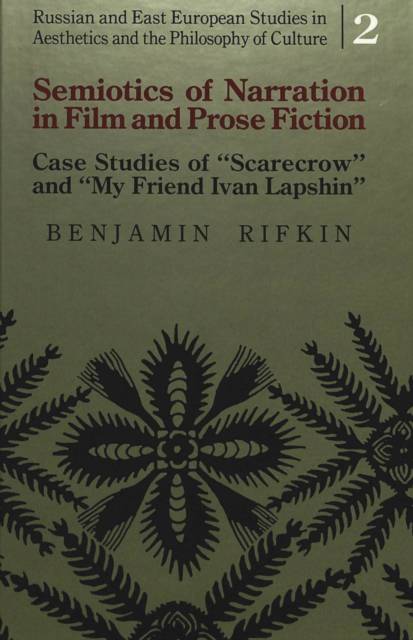
Semiotics of Narration in Film and Prose Fiction
Case Studies of Scarecrow and My Friend Ivan Lapshin
Benjamin Rifkin
€ 69,95
+ 139 punten
Omschrijving
This interesting study of film adaptation focuses on two pairs of works, each consisting of a Russian novella and a Russian film: V. K. Zheleznikov's «Scarecrow» (1981) and R. A. Bykov's Scarecrow (1983); and Ju. P. German's «Lapshin» and A. Ju. German's My Friend Ivan Lapshin (1985). The author examines the transformation of the narrator's discourse in the adaptation process and discusses the meaning conveyed by signs and sign systems unique to the filmic text and its medium, including lighting, foregrounding and backgrounding, and the soundtrack. In his analysis, the author demonstrates how filmmakers use sign systems unique to film to add and/or alter meanings conveyed in the literary texts on which their films were based.
Specificaties
Betrokkenen
- Auteur(s):
- Uitgeverij:
Inhoud
- Aantal bladzijden:
- 249
- Taal:
- Engels
- Reeks:
- Reeksnummer:
- nr. 2
Eigenschappen
- Productcode (EAN):
- 9780820419954
- Verschijningsdatum:
- 1/08/1994
- Uitvoering:
- Hardcover
- Formaat:
- Genaaid
- Afmetingen:
- 237 mm x 161 mm
- Gewicht:
- 539 g


Alleen bij Standaard Boekhandel
+ 139 punten op je klantenkaart van Standaard Boekhandel
Cadeau

AANGERADEN


Beoordelingen
We publiceren alleen reviews die voldoen aan de voorwaarden voor reviews. Bekijk onze voorwaarden voor reviews.