


- Afhalen na 1 uur in een winkel met voorraad
- Gratis thuislevering in België vanaf € 30
- Ruim aanbod met 7 miljoen producten
- Afhalen na 1 uur in een winkel met voorraad
- Gratis thuislevering in België vanaf € 30
- Ruim aanbod met 7 miljoen producten





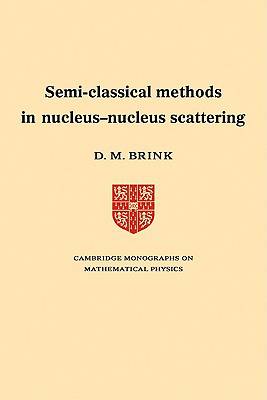
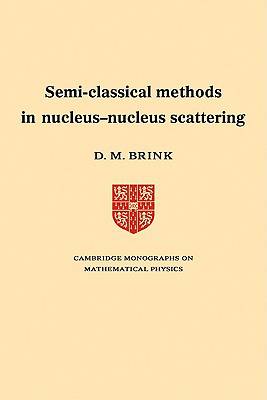
Semi-Classical Methods for Nucleus-Nucleus Scattering
D M Brink
€ 58,45
+ 116 punten
Eenvoudig bestellen
Veilig betalen


Gratis thuislevering vanaf € 30 (via bpost)
Gratis levering in je Standaard Boekhandel
Omschrijving
During past years many countries constructed large accelerators for investigating heavy ion collisions, and new theoretical techniques for analysing results and making predictions were developed. Semi-classical methods were studied in the early days of quantum mechanics. Their application to heavy ion collisions has led to new advances and a number of different schools have grown up, each one emphasising different aspects of the theory. The aim of this book is to present a unified treatment of various lines of development. This book will be of great interest to graduate students wishing to learn about semi-classical methods in nuclear physics and to theoretical and experimental nuclear physicists, especially those working in heavy ion physics. It will also be of interest to research workers in other areas, such as atomic physics and quantum chemistry, where similar techniques are used.
Specificaties
Betrokkenen
- Auteur(s):
- Uitgeverij:
Inhoud
- Aantal bladzijden:
- 232
- Taal:
- Engels
- Reeks:
Eigenschappen
- Productcode (EAN):
- 9780521114387
- Verschijningsdatum:
- 25/06/2009
- Uitvoering:
- Paperback
- Formaat:
- Trade paperback (VS)
- Afmetingen:
- 152 mm x 229 mm
- Gewicht:
- 344 g


Alleen bij Standaard Boekhandel
+ 116 punten op je klantenkaart van Standaard Boekhandel
CADEAU

AANGERADEN


Beoordelingen
We publiceren alleen reviews die voldoen aan de voorwaarden voor reviews. Bekijk onze voorwaarden voor reviews.