

- Afhalen na 1 uur in een winkel met voorraad
- Gratis thuislevering in België vanaf € 30
- Ruim aanbod met 7 miljoen producten
- Afhalen na 1 uur in een winkel met voorraad
- Gratis thuislevering in België vanaf € 30
- Ruim aanbod met 7 miljoen producten





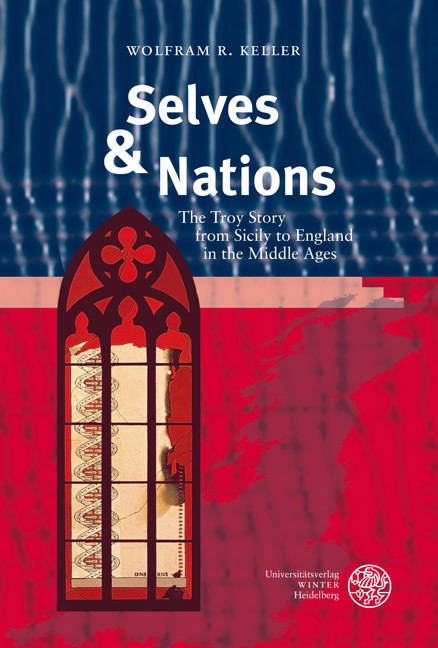
Selves & Nations
The Troy Story from Sicily to England in the Middle Ages. Dissertationsschrift
Wolfram R. Keller
€ 67,45
+ 134 punten
Omschrijving
"Selves & Nations" aims to contribute to our critical and historical understanding of the literary and cultural work performed by the Troy story, the most widely disseminated secular narrative in the Middle Ages. Reflecting contentious recent debates concerning selfhood, social performance, and nationalism, "Selves & Nations" investigates the link between individual and national identities as it emerges in the Troy stories of Benoît de Sainte-Maure, Guido delle Colonne, Geoffrey Chaucer, John Lydgate, and Robert Henryson as well as the anonymous "Laud Troy Book". The study's cognitive, mythological approach unmasks Guide delle Colonne's Latin, imperial attempt to curtail the productive potential of Benoît's vernacular nationhood. The Middle English Troy stories, by means of a profound engagement with classical historiographical and poetological models, recover Benoît's Ovidian changeability, however, and chart viable alternatives to static constructions of collective identities in general and Guidoan imperialism in particular: with the poets, nationhood transforms into counter-nationhood.
Specificaties
Betrokkenen
- Auteur(s):
- Uitgeverij:
Inhoud
- Aantal bladzijden:
- 644
- Taal:
- Engels
- Reeks:
- Reeksnummer:
- nr. 25
Eigenschappen
- Productcode (EAN):
- 9783825354435
- Uitvoering:
- Hardcover
- Afmetingen:
- 165 mm x 245 mm
- Gewicht:
- 1220 g


Alleen bij Standaard Boekhandel
+ 134 punten op je klantenkaart van Standaard Boekhandel
CADEAU


Beoordelingen
We publiceren alleen reviews die voldoen aan de voorwaarden voor reviews. Bekijk onze voorwaarden voor reviews.