


- Afhalen na 1 uur in een winkel met voorraad
- Gratis thuislevering in België vanaf € 30
- Ruim aanbod met 7 miljoen producten
- Afhalen na 1 uur in een winkel met voorraad
- Gratis thuislevering in België vanaf € 30
- Ruim aanbod met 7 miljoen producten





€ 19,95
+ 39 punten
Omschrijving
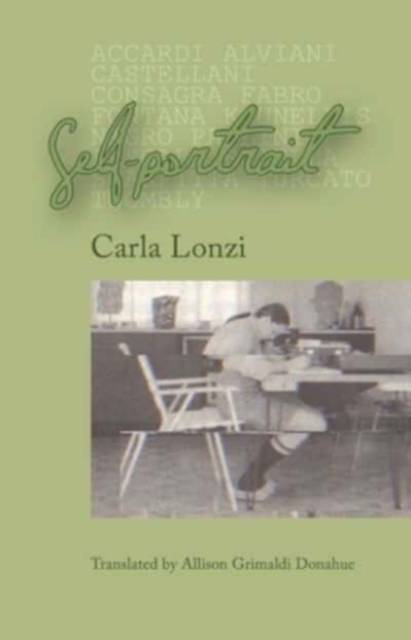
Recorded and transcribed throughout the 1960s, Carla Lonzi's Self-portrait ruptures the linear tradition of art-historical writing. Lonzi first abolishes the role of the critic, her own, seeking change over self-preservation by theorising against the act of theorising. This is the voice of feminist experimentalism in Italian art and literature, and here Lonzi speaks for herself in English. Self-portrait montages her verbatim conversations with fourteen prominent artists working at the time, all men except one. Lonzi's vital feeling that it was impossible to respond professionally to the political and existential problems embedded in the production and distribution of artworks drives the book's contingent structure. Artmaking struck Lonzi as the invitation to be together in a humanly satisfying way. This first English translation brings Lonzi's final work of criticism before her break with 'art' to an international audience. Her uncompromising enactment and pragmatic drop-out discontinues the narration of postwar modern art in Italy and beyond.
Specificaties
Betrokkenen
- Auteur(s):
- Vertaler(s):
- Uitgeverij:
Inhoud
- Aantal bladzijden:
- 300
- Taal:
- Engels
Eigenschappen
- Productcode (EAN):
- 9781916425088
- Verschijningsdatum:
- 15/02/2022
- Uitvoering:
- Paperback
- Formaat:
- Trade paperback (VS)
- Afmetingen:
- 140 mm x 213 mm
- Gewicht:
- 498 g



Alleen bij Standaard Boekhandel
+ 39 punten op je klantenkaart van Standaard Boekhandel
Cadeau

AANGERADEN


Beoordelingen
We publiceren alleen reviews die voldoen aan de voorwaarden voor reviews. Bekijk onze voorwaarden voor reviews.