


- Afhalen na 1 uur in een winkel met voorraad
- Gratis thuislevering in België vanaf € 30
- Ruim aanbod met 7 miljoen producten
- Afhalen na 1 uur in een winkel met voorraad
- Gratis thuislevering in België vanaf € 30
- Ruim aanbod met 7 miljoen producten





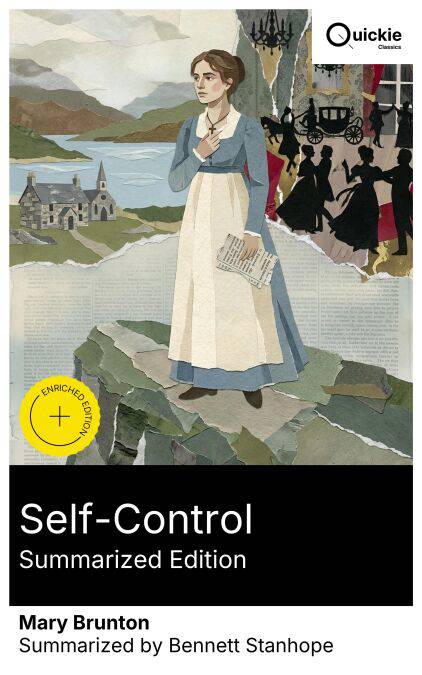
Self-Control (Summarized Edition) E-BOOK
Enriched edition. A Romantic-era journey through 19th-century Scotland, exploring female virtue, moral dilemmas, emotional introspection, and personal agency
Mary Brunton
E-book | Engels
€ 1,99
+ 1 punten
Omschrijving
Self-Control (1811) follows Laura Montreville, a principled young woman whose piety and rational self-command are tested by poverty, filial duty, and the predatory attentions of a libertine. Brunton fuses domestic realism with evangelical didacticism, setting London sociability and Scottish quietude against melodramatic peril that presses virtue to its limits. Her polished, reflective narration—mixing dialogue with concise moral commentary—places the novel between sentimental tradition and the emergent psychological realism of the 1810s, in conversation with Edgeworth and Hannah More, and in tacit dialogue with Austen's ironies. Mary Brunton, a Scottish minister's wife formed by kirk culture and Enlightenment Edinburgh, wrote from a vantage where theology, moral philosophy, and sociability met. Her evangelical commitments and intimate view of clerical life drive the portrayal of self-control as active discipline: prudence governing sensibility, Christian principle directing choice. She aimed to give young readers a practicable ethic of desire and duty while correcting the era's theatrically sentimental plots. This is indispensable for readers of Romantic-era women's writing, for scholars of virtue ethics and gendered agency, and for anyone who admires Austen yet wants a more overtly theological experiment in character. Read it for its searching moral intelligence and its unexpectedly gripping tests of conscience.
Quickie Classics summarizes timeless works with precision, preserving the author's voice and keeping the prose clear, fast, and readable—distilled, never diluted. Enriched Edition extras: Introduction · Synopsis · Historical Context · Brief Analysis · 4 Reflection Q&As · Editorial Footnotes.
Quickie Classics summarizes timeless works with precision, preserving the author's voice and keeping the prose clear, fast, and readable—distilled, never diluted. Enriched Edition extras: Introduction · Synopsis · Historical Context · Brief Analysis · 4 Reflection Q&As · Editorial Footnotes.
Specificaties
Betrokkenen
- Auteur(s):
- Uitgeverij:
Inhoud
- Aantal bladzijden:
- 157
- Taal:
- Engels
Eigenschappen
- Productcode (EAN):
- 8596547882961
- Verschijningsdatum:
- 9/01/2026
- Uitvoering:
- E-book
- Beveiligd met:
- Digital watermarking
- Formaat:
- ePub


Alleen bij Standaard Boekhandel
+ 1 punten op je klantenkaart van Standaard Boekhandel
Cadeau

AANGERADEN


Beoordelingen
We publiceren alleen reviews die voldoen aan de voorwaarden voor reviews. Bekijk onze voorwaarden voor reviews.