


- Afhalen na 1 uur in een winkel met voorraad
- Gratis thuislevering in België vanaf € 30
- Ruim aanbod met 7 miljoen producten
- Afhalen na 1 uur in een winkel met voorraad
- Gratis thuislevering in België vanaf € 30
- Ruim aanbod met 7 miljoen producten





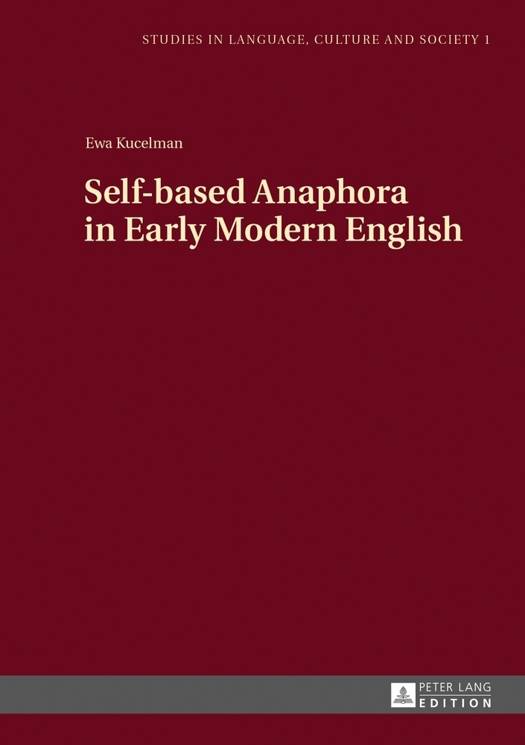
Self-Based Anaphora in Early Modern English
Ewa Kucelman
€ 58,45
+ 116 punten
Omschrijving
This book is a corpus-based study which aims to describe the class of self-pronouns as used in the Early Modern English period. Self-pronouns are presented as a multi-functional class, with two main functions, as emphatic forms and as reflexive markers. The emphatic function is seen as a continuation of an earlier state of affairs, whereas the reflexive function is described as a new, emerging one. As reflexive markers, self-pronouns in Early Modern English compete with personal pronouns. Therefore the book seeks to present the conditions of their distribution ranging from configurational and thematic through discursive to pragmatic factors involved in the choice of the reflexive strategy.
Specificaties
Betrokkenen
- Auteur(s):
- Uitgeverij:
Inhoud
- Aantal bladzijden:
- 188
- Taal:
- Engels
- Reeks:
- Reeksnummer:
- nr. 1
Eigenschappen
- Productcode (EAN):
- 9783631643501
- Verschijningsdatum:
- 25/09/2013
- Uitvoering:
- Hardcover
- Formaat:
- Genaaid
- Afmetingen:
- 148 mm x 210 mm
- Gewicht:
- 359 g


Alleen bij Standaard Boekhandel
+ 116 punten op je klantenkaart van Standaard Boekhandel
Cadeau

AANGERADEN


Beoordelingen
We publiceren alleen reviews die voldoen aan de voorwaarden voor reviews. Bekijk onze voorwaarden voor reviews.