


- Afhalen na 1 uur in een winkel met voorraad
- Gratis thuislevering in België vanaf € 30
- Ruim aanbod met 7 miljoen producten
- Afhalen na 1 uur in een winkel met voorraad
- Gratis thuislevering in België vanaf € 30
- Ruim aanbod met 7 miljoen producten





€ 36,45
+ 72 punten
Omschrijving
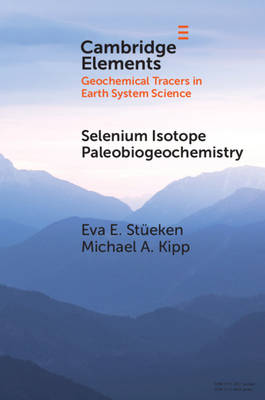
The attraction of selenium isotopes as a paleoenvironmental tracer lies in the high redox potential of selenium oxyanions (SeIV and SeVI), the dominant species in the modern ocean. The largest isotopic fractionations occur during oxyanion reduction, which makes selenium isotopes a sensitive proxy for the redox evolution of our planet. As a case study we review existing data from the Neoarchean and Paleoproterozoic, which show that significant isotopic fractionations are absent until 2.5 Ga, and prolonged isotopic deviations only appear around 2.3 Ga. Selenium isotopes have thus begun to reveal complex spatiotemporal redox patterns not reflected in other proxies.
Specificaties
Betrokkenen
- Auteur(s):
- Uitgeverij:
Inhoud
- Aantal bladzijden:
- 30
- Taal:
- Engels
- Reeks:
Eigenschappen
- Productcode (EAN):
- 9781108749169
- Verschijningsdatum:
- 8/10/2020
- Uitvoering:
- Paperback
- Formaat:
- Trade paperback (VS)
- Afmetingen:
- 152 mm x 229 mm
- Gewicht:
- 54 g


Alleen bij Standaard Boekhandel
+ 72 punten op je klantenkaart van Standaard Boekhandel
Cadeau

AANGERADEN


Beoordelingen
We publiceren alleen reviews die voldoen aan de voorwaarden voor reviews. Bekijk onze voorwaarden voor reviews.