


- Afhalen na 1 uur in een winkel met voorraad
- Gratis thuislevering in België vanaf € 30
- Ruim aanbod met 7 miljoen producten
- Afhalen na 1 uur in een winkel met voorraad
- Gratis thuislevering in België vanaf € 30
- Ruim aanbod met 7 miljoen producten





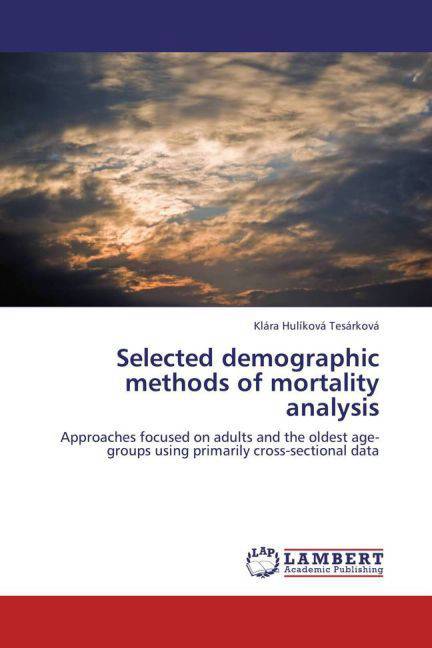
Selected demographic methods of mortality analysis
Approaches focused on adults and the oldest age-groups using primarily cross-sectional data
Klára Hulíková Tesárková
Paperback | Engels
€ 70,95
+ 141 punten
Omschrijving
This work is based on Doctoral work introducing selected methods of mortality analysis focused primarily on adults and the oldest-old. The first part is devoted to the basic theoretical as well as practical approaches to mortality in demography. The basis is primarily a detailed description of the life table construction and calculation of fundamental measures mortality rates, exposure time, etc. The second part then presents different specific approaches to the analysis of mortality, which are based on the basics from the first part of the work and which are highly inter-related. In this part, there are introduced for example the process of rectangularization of the survival curve, analysis of the tempo effect, description of the shifting process, decomposition of mortality into the background and senescent component, or the frailty models. All methods included in this work are useful in working with the cross-sectional (period) data. The work also includes a separate macro code for the statistical software SAS usable for easy calculation of parameters of selected mortality laws. This macro is continuously updated and it is available online.
Specificaties
Betrokkenen
- Auteur(s):
- Uitgeverij:
Inhoud
- Aantal bladzijden:
- 404
- Taal:
- Engels
Eigenschappen
- Productcode (EAN):
- 9783659404139
- Verschijningsdatum:
- 5/06/2013
- Uitvoering:
- Paperback
- Afmetingen:
- 150 mm x 220 mm
- Gewicht:
- 552 g


Alleen bij Standaard Boekhandel
+ 141 punten op je klantenkaart van Standaard Boekhandel
Cadeau

AANGERADEN


Beoordelingen
We publiceren alleen reviews die voldoen aan de voorwaarden voor reviews. Bekijk onze voorwaarden voor reviews.