


- Afhalen na 1 uur in een winkel met voorraad
- Gratis thuislevering in België vanaf € 30
- Ruim aanbod met 7 miljoen producten
- Afhalen na 1 uur in een winkel met voorraad
- Gratis thuislevering in België vanaf € 30
- Ruim aanbod met 7 miljoen producten





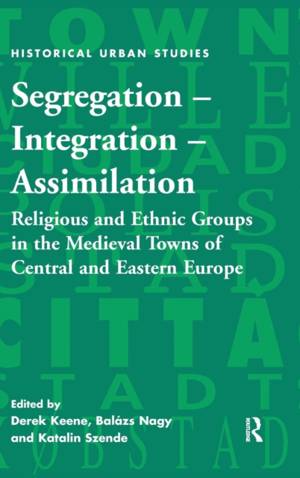
Segregation - Integration - Assimilation
Religious and Ethnic Groups in the Medieval Towns of Central and Eastern Europe
€ 343,45
+ 686 punten
Eenvoudig bestellen
Veilig betalen


Gratis thuislevering vanaf € 30 (via bpost)
Gratis levering in je Standaard Boekhandel
Omschrijving
Whilst most historical investigations of ethnic and religious minorities concentrate on a single town or particular group, this volume offers a much broader geographical and chronological view. Looking at towns across western, and particularly, eastern Europe from the late antique period to the fifteenth century, these papers illustrate the changing nature of questions of identity, perception, legal status and relations between groups, together with the ways in which these elements were affected by the external political regimes and ideologies to which towns were inevitably subjected.
Specificaties
Betrokkenen
- Uitgeverij:
Inhoud
- Aantal bladzijden:
- 282
- Taal:
- Engels
- Reeks:
Eigenschappen
- Productcode (EAN):
- 9780754664772
- Verschijningsdatum:
- 28/10/2009
- Uitvoering:
- Hardcover
- Formaat:
- Genaaid
- Afmetingen:
- 156 mm x 234 mm
- Gewicht:
- 576 g

Alleen bij Standaard Boekhandel
+ 686 punten op je klantenkaart van Standaard Boekhandel
CADEAU

AANGERADEN


Beoordelingen
We publiceren alleen reviews die voldoen aan de voorwaarden voor reviews. Bekijk onze voorwaarden voor reviews.