



Bedankt voor het vertrouwen het afgelopen jaar! Om jou te bedanken bieden we GRATIS verzending (in België) aan op alles gedurende de hele maand januari.
- Afhalen na 1 uur in een winkel met voorraad
- In januari gratis thuislevering in België
- Ruim aanbod met 7 miljoen producten
Bedankt voor het vertrouwen het afgelopen jaar! Om jou te bedanken bieden we GRATIS verzending (in België) aan op alles gedurende de hele maand januari.
- Afhalen na 1 uur in een winkel met voorraad
- In januari gratis thuislevering in België
- Ruim aanbod met 7 miljoen producten





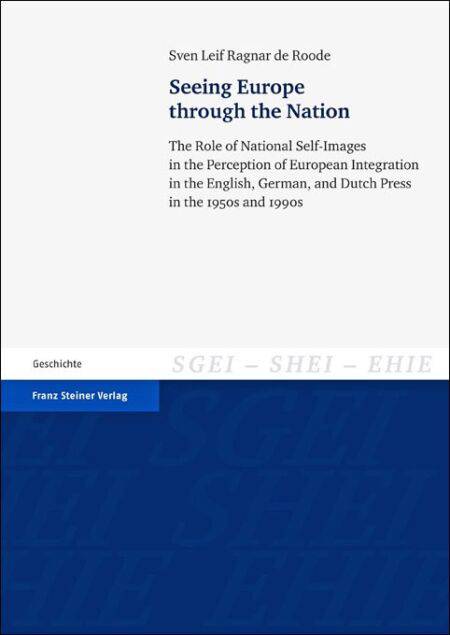
Seeing Europe through the Nation E-BOOK
The Role of National Self-Images in the Perception of European Integration in the English, German, and Dutch Press in the 1950s and 1990s
Sven Leif Ragnat de Roode
€ 57,00
+ 57 punten
Omschrijving
Sven Leif Ragnar de Roode analyzes Dutch, English, and German perceptions of European integration against the backdrop of dominant elements of national self-images in a comparative perspective. The study is based on a source sample of more than 1200 newspaper editorials about the founding treaties of the European Communities in the 1950s and the Treaty on European Union from 1992/3. The source analysis is framed by an analysis of dominant, publicly acknowledged national self-images in the nineteenth- and twentieth-century. The representation of European integration in Dutch, English, and German newspapers shows that both, the perception of Europe and national self-images, were essentially contested. It demonstrates how nationalised the gaze unto Europe was. The perception of Europe was tinted and judged by national self-images. The discourse on European integration was inseparably intertwined with the discourse on the nation. Europe was essentially thought 'through' the nation.
Specificaties
Betrokkenen
- Auteur(s):
- Uitgeverij:
Inhoud
- Aantal bladzijden:
- 272
- Taal:
- Engels
- Reeks:
Eigenschappen
- Productcode (EAN):
- 9783515102223
- Verschijningsdatum:
- 10/09/2012
- Uitvoering:
- E-book
- Beveiligd met:
- Digital watermarking
- Formaat:



Alleen bij Standaard Boekhandel
+ 57 punten op je klantenkaart van Standaard Boekhandel
SOLDEN


Beoordelingen
We publiceren alleen reviews die voldoen aan de voorwaarden voor reviews. Bekijk onze voorwaarden voor reviews.