



- Afhalen na 1 uur in een winkel met voorraad
- In januari gratis thuislevering in België
- Ruim aanbod met 7 miljoen producten
- Afhalen na 1 uur in een winkel met voorraad
- In januari gratis thuislevering in België
- Ruim aanbod met 7 miljoen producten




€ 17,99
+ 35 punten
Uitvoering
Omschrijving
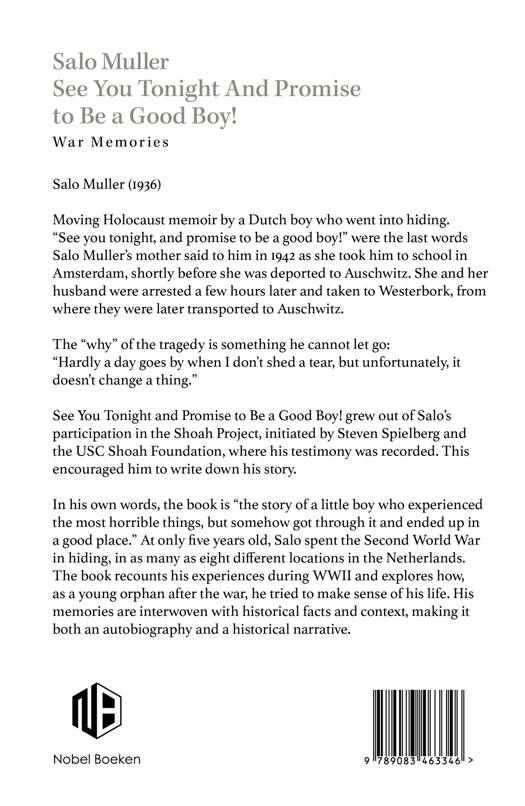
Salo Muller (1936)
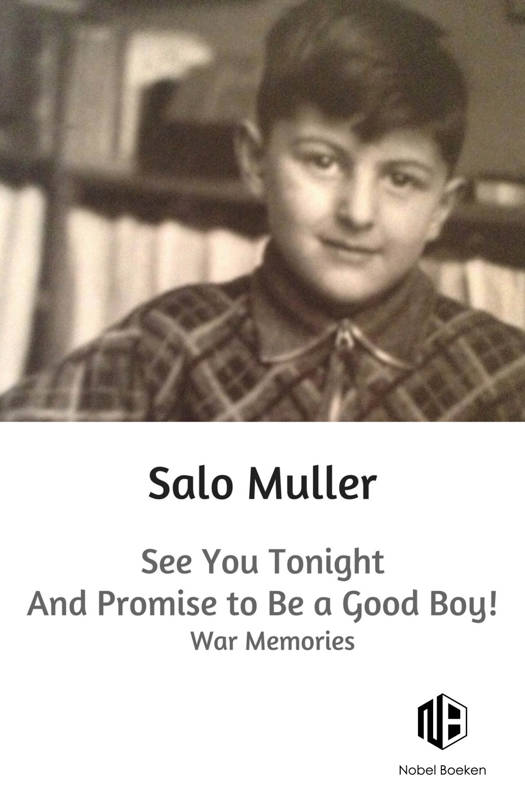
Moving Holocaust memoir by a Dutch boy who went into hiding.
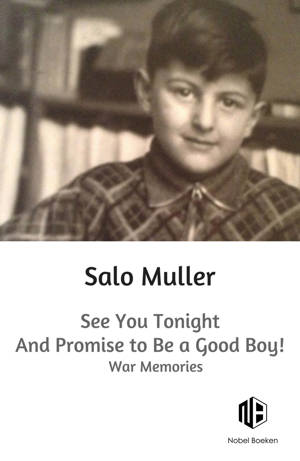
“See you tonight, and promise to be a good boy!” were the last words Salo Muller’s mother said to him in 1942 as she took him to school in Amsterdam, shortly before she was deported to Auschwitz. She and her husband were arrested a few hours later and taken to Westerbork, from where they were later transported to Auschwitz.
The “why” of the tragedy is something he cannot let go:
“Hardly a day goes by when I don’t shed a tear, but unfortunately, it doesn’t change a thing.”
See You Tonight and Promise to Be a Good Boy! grew out of Salo’s participation in the Shoah Project, initiated by Steven Spielberg and the USC Shoah Foundation, where his testimony was recorded. This encouraged him to write down his story as a young boy in hiding for the nazi's.
In his own words, the book is “the story of a little boy who experienced the most horrible things, but somehow got through it and ended up in a good place.”
At only five years old, Salo spent the Second World War in hiding, in as many as eight different locations in the Netherlands. The book recounts his experiences during WWII and explores how, as a young orphan after the war, he tried to make sense of his life. His memories are interwoven with historical facts and context, making it both an autobiography and a historical narrative.
Moving Holocaust memoir by a Dutch boy who went into hiding.
“See you tonight, and promise to be a good boy!” were the last words Salo Muller’s mother said to him in 1942 as she took him to school in Amsterdam, shortly before she was deported to Auschwitz. She and her husband were arrested a few hours later and taken to Westerbork, from where they were later transported to Auschwitz.
The “why” of the tragedy is something he cannot let go:
“Hardly a day goes by when I don’t shed a tear, but unfortunately, it doesn’t change a thing.”
See You Tonight and Promise to Be a Good Boy! grew out of Salo’s participation in the Shoah Project, initiated by Steven Spielberg and the USC Shoah Foundation, where his testimony was recorded. This encouraged him to write down his story as a young boy in hiding for the nazi's.
In his own words, the book is “the story of a little boy who experienced the most horrible things, but somehow got through it and ended up in a good place.”
At only five years old, Salo spent the Second World War in hiding, in as many as eight different locations in the Netherlands. The book recounts his experiences during WWII and explores how, as a young orphan after the war, he tried to make sense of his life. His memories are interwoven with historical facts and context, making it both an autobiography and a historical narrative.
Specificaties
Betrokkenen
- Auteur(s):
- Vertaler(s):
- Uitgeverij:
Inhoud
- Aantal bladzijden:
- 198
- Taal:
- Engels
Eigenschappen
- Productcode (EAN):
- 9789083463346
- Verschijningsdatum:
- 15/12/2025
- Uitvoering:
- Paperback
- Afmetingen:
- 150 mm x 230 mm
- Gewicht:
- 326 g


Alleen bij Standaard Boekhandel
+ 35 punten op je klantenkaart van Standaard Boekhandel
Cadeau

AANGERADEN


Beoordelingen
We publiceren alleen reviews die voldoen aan de voorwaarden voor reviews. Bekijk onze voorwaarden voor reviews.