


- Afhalen na 1 uur in een winkel met voorraad
- Gratis thuislevering in België vanaf € 30
- Ruim aanbod met 7 miljoen producten
- Afhalen na 1 uur in een winkel met voorraad
- Gratis thuislevering in België vanaf € 30
- Ruim aanbod met 7 miljoen producten





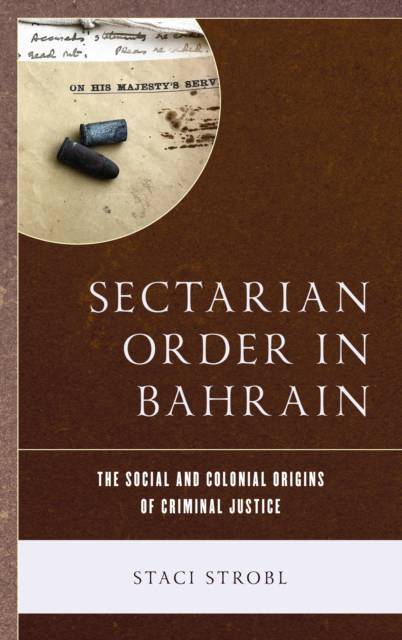
Sectarian Order in Bahrain
The Social and Colonial Origins of Criminal Justice
Staci Strobl
Hardcover | Engels
€ 195,45
+ 390 punten
Omschrijving
Sectarian Order in Bahrain connects the rise of colonial criminal justice in Bahrain and sectarianism, making detailed use of an archival cache of colonial criminal court cases in the British Library, and offering a critical analysis. Using primary and secondary historical documents, including ethnographic and anthropological accounts, the book links major themes in critical and cultural criminology, southern criminology, historical sociology, post-colonialism, and Gulf studies which have not been adequately examined together. It drills down on an important group of surviving criminal court case files, and shows how they can describe the problem of and inform solutions to sectarian discrimination in Bahrain. There are two major shifts in notions of the social order and order maintenance that characterize the 20th century, highlighting a sectarianism modus operandi within the colonial criminal justice system. The shifts are the criminalization of inter-tribal competition and honor-based modes of behavior in order to prevent intra-Sunni contestation and to unite Sunnis under Al-Khalifah and colonial authority; and the invention of indigenous Shi'a and Persian Bahrainis as a criminal class as an extension of the sectarianism long practiced by the Al Khalifah (and other Sunni tribes). Together these two shifts birth a modern criminal justice system that institutionalizes Sunni chauvinism and Shi'a discrimination, problems evident in the Bahraini criminal justice system today.
Specificaties
Betrokkenen
- Auteur(s):
- Uitgeverij:
Inhoud
- Aantal bladzijden:
- 192
- Taal:
- Engels
Eigenschappen
- Productcode (EAN):
- 9781498541602
- Verschijningsdatum:
- 15/09/2018
- Uitvoering:
- Hardcover
- Formaat:
- Genaaid
- Afmetingen:
- 157 mm x 231 mm
- Gewicht:
- 598 g



Alleen bij Standaard Boekhandel
+ 390 punten op je klantenkaart van Standaard Boekhandel
Cadeau

AANGERADEN


Beoordelingen
We publiceren alleen reviews die voldoen aan de voorwaarden voor reviews. Bekijk onze voorwaarden voor reviews.