


- Afhalen na 1 uur in een winkel met voorraad
- Gratis thuislevering in België vanaf € 30
- Ruim aanbod met 7 miljoen producten
- Afhalen na 1 uur in een winkel met voorraad
- Gratis thuislevering in België vanaf € 30
- Ruim aanbod met 7 miljoen producten





€ 59,45
+ 118 punten
Omschrijving
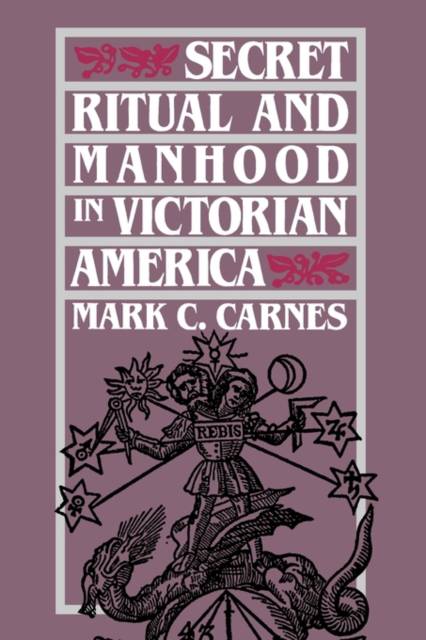
Freemasons, Odd Fellows, Knights of Pythias-why did millions of nineteenth-century American men belong to these and other secret orders? In this engrossing study, Mark C. Carnes argues that fraternal rituals created a fantasy world antithetical to prevailing religious practices, gender roles, and institutional structures, offering a male religious counterculture that opposed an increasingly liberal and feminized Protestantism. "[An] original and compelling study. . . . Making use of anthropology as well as social history, Carnes is probably the first outsider to take these rituals seriously. . . . Playing the role of a graceful, controlling . . . guide into these mysteries, Carnes slowly unveils his thesis, which itself has several layers of mystery."-David Leverentz, New England Quarterly "An imaginative fusion of social and intellectual history. . . . Carnes's work shows the true depth of nineteenth-century male sexual anxiety and hostility toward women. In this compelling book, Carnes opens new approaches to the study of gender and helps us better understand the reorientation of American culture at the turn of the century." -Donald Yacovone, Journal of American History "This is an important monograph in the field of men's history. . . . This is ambitious conceptualization-the book is a refreshingly bold statement. . . . I find most of its conclusions accurate."-Peter N. Stearns, Journal of Ritual Studies "The breadth and thoroughness of this book is impressive. Carnes draws on the literature of the time, religious history and theology, child rearing and developmental psychology, women's history and gender studies, and structural and cultural anthropology."-Rosamund Orde-Powlett, Literary Review
Specificaties
Betrokkenen
- Auteur(s):
- Uitgeverij:
Inhoud
- Aantal bladzijden:
- 240
- Taal:
- Engels
Eigenschappen
- Productcode (EAN):
- 9780300051469
- Verschijningsdatum:
- 1/07/1991
- Uitvoering:
- Paperback
- Formaat:
- Trade paperback (VS)
- Afmetingen:
- 157 mm x 237 mm
- Gewicht:
- 353 g



Alleen bij Standaard Boekhandel
+ 118 punten op je klantenkaart van Standaard Boekhandel
Cadeau

AANGERADEN


Beoordelingen
We publiceren alleen reviews die voldoen aan de voorwaarden voor reviews. Bekijk onze voorwaarden voor reviews.