


- Afhalen na 1 uur in een winkel met voorraad
- Gratis thuislevering in België vanaf € 30
- Ruim aanbod met 7 miljoen producten
- Afhalen na 1 uur in een winkel met voorraad
- Gratis thuislevering in België vanaf € 30
- Ruim aanbod met 7 miljoen producten





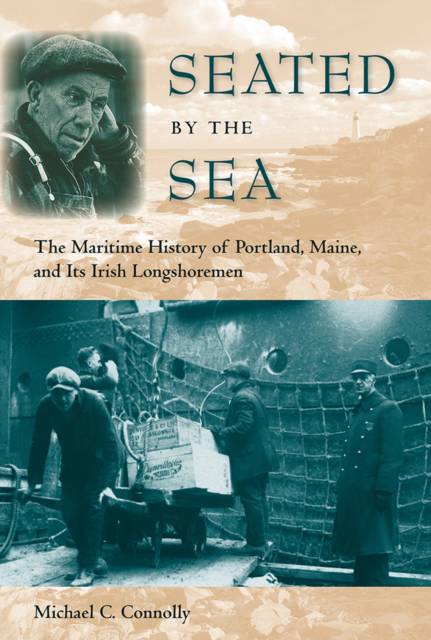
Seated by the Sea
The Maritime History of Portland, Maine, and Its Irish Longshoremen
Michael C Connolly
€ 45,95
+ 91 punten
Omschrijving
"Traces the rise of the Irish-American immigrant community in Portland, Maine, through its control of waterfront labor over eight decades before the port's twentieth century decline. The book is a valuable contribution to local labor history that situates its subject within the broader picture of U.S. history during a crucial period in the formation of the nation's economic and social identity."--Lincoln P. Paine, author of Down East "Vividly reveals how America's maritime culture has declined over a very short period of time."--Gene Allen Smith, coeditor, New Perspectives on Maritime History and Nautical Archaeology series "Provides crucial insight into the ethnic dimension of New England's longshoremen."--Josh Smith, U.S. Merchant Marine Academy "Michael Connolly has down a masterful piece of research and writing that fills in so much that is left out of the history books. Seated by the Sea documents the rise and fall of Portland, Maine's maritime fortunes, the immigrant Irish who dominated its dockside work, and the independent longshore union that the workers formed to help claim their place in Amerca. This well-written history overcomes the lack of good scholarship on Atlantic Ocean longshore unionism prior to the twentieth century and truly puts the importance of Portland's maritime heritage on the map."--John Beck, Michigan State University For decades, Portland, Maine, was the closest ice-free port to Europe. As such, it was key to the transport of Canadian wheat across the Atlantic, losing its prominence only after WWII, as containerization came to dominate all shipping and Portland shifted its focus to tourism. Michael Connolly offers an in-depth study of the on-shore labor force that made the port function from the mid-nineteenth through the mid-twentieth centuries. He shows how Irish immigrants replaced and supplanted the existing West Indian workers and established benevolent societies and unions that were closed to blacks. Using this fascinating city and these hard-working longshoremen as a case study, he sheds light on a larger tale of ethnicity, class, regionalism, and globalization.
Specificaties
Betrokkenen
- Auteur(s):
- Uitgeverij:
Inhoud
- Aantal bladzijden:
- 304
- Taal:
- Engels
- Reeks:
Eigenschappen
- Productcode (EAN):
- 9780813037226
- Verschijningsdatum:
- 25/03/2011
- Uitvoering:
- Paperback
- Formaat:
- Trade paperback (VS)
- Afmetingen:
- 150 mm x 226 mm
- Gewicht:
- 417 g



Alleen bij Standaard Boekhandel
+ 91 punten op je klantenkaart van Standaard Boekhandel
Cadeau

AANGERADEN


Beoordelingen
We publiceren alleen reviews die voldoen aan de voorwaarden voor reviews. Bekijk onze voorwaarden voor reviews.