


- Afhalen na 1 uur in een winkel met voorraad
- Gratis thuislevering in België vanaf € 30
- Ruim aanbod met 7 miljoen producten
- Afhalen na 1 uur in een winkel met voorraad
- Gratis thuislevering in België vanaf € 30
- Ruim aanbod met 7 miljoen producten





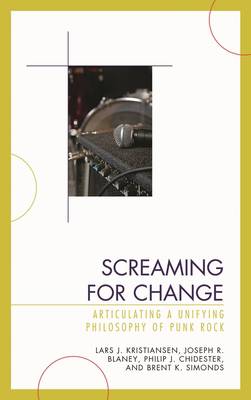
Screaming for Change
Articulating a Unifying Philosophy of Punk Rock
Lars J Kristiansen, Joseph R Blaney, Philip J Chidester, Brent K Simonds
Hardcover | Engels
€ 220,45
+ 440 punten
Omschrijving
Screaming for Change advances an understanding of punk rock by going beyond description of punk as a musical, political, social, and cultural genre of communication. Previous scholarship about punk rock has primarily dealt with those boundaries of genre. Previous scholars neglected to examine the ideology of punk across the decades and continents. That ideology, in a word, is deviance. Through Gramscian textual analysis, this book uncovers this ideology of deviance with some surprises along the way. Students and scholars of punk rock will value the book's attention to both well known and more esoteric punk artists. Punk is arguable the most studied 'subculture' to ever launch itself onto the larger social agenda as a possible counterbalance to the mainstream cultural hegemony. During the late 1970s, punk scenes sprouted up in large numbers all over the globe, and it appears that deep feelings of discontent towards the inherent alienation present in the capitalist system were the motivational seed that facilitated their growth. Unconvinced that the historical accounts have been successful in adequately describing and proficiently capturing the essence of punk, this study examines the phenomenon in slightly different terms. This study proposes that punk should be understood as a way of seeing the world, as a way of reasoning, or, essentially, as a philosophy on its own terms.
Specificaties
Betrokkenen
- Auteur(s):
- Uitgeverij:
Inhoud
- Aantal bladzijden:
- 172
- Taal:
- Engels
Eigenschappen
- Productcode (EAN):
- 9780739142745
- Verschijningsdatum:
- 1/03/2010
- Uitvoering:
- Hardcover
- Formaat:
- Ongenaaid / garenloos gebonden
- Afmetingen:
- 155 mm x 231 mm
- Gewicht:
- 408 g


Alleen bij Standaard Boekhandel
+ 440 punten op je klantenkaart van Standaard Boekhandel
Cadeau

AANGERADEN


Beoordelingen
We publiceren alleen reviews die voldoen aan de voorwaarden voor reviews. Bekijk onze voorwaarden voor reviews.