


- Afhalen na 1 uur in een winkel met voorraad
- Gratis thuislevering in België vanaf € 30
- Ruim aanbod met 7 miljoen producten
- Afhalen na 1 uur in een winkel met voorraad
- Gratis thuislevering in België vanaf € 30
- Ruim aanbod met 7 miljoen producten





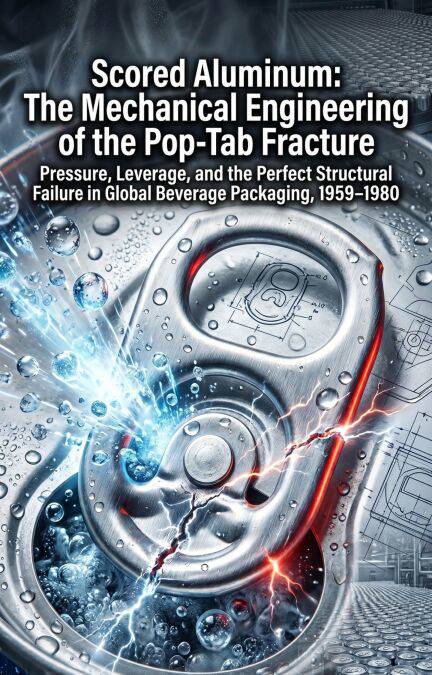
Scored Aluminum: The Mechanical Engineering of the Pop-Tab Fracture E-BOOK
Pressure, Leverage, and the Perfect Structural Failure in Global Beverage Packaging, 1959–1980
James Cunningham
E-book | Engels
€ 4,99
+ 4 punten
Omschrijving
Have you ever considered the mechanical miracle required to keep a heavily carbonated beverage perfectly sealed under intense internal pressure, yet easily opened by the casual flick of a human finger? The modern aluminum beverage can is an unsung masterpiece of structural engineering, specifically relying on the physics of the pop-tab fracture.
Before the invention of the integrated stay-on tab in the late 1970s, opening a drink required a separate, sharp piercing tool. The genius of the modern design lies in microscopic material science. The lid of the can is meticulously scored—cut to a highly specific fractional depth. It must remain thick enough to withstand 90 pounds of internal fluid pressure, yet thin enough that the small aluminum ring acts as a second-class lever, effortlessly snapping the scored metal along a predetermined fault line without dropping jagged shrapnel into the liquid.
This fascinating historical breakdown dissects the multi-billion-dollar evolution of everyday packaging. It explores the metallurgical trial-and-error, the massive industrial stamping machines, and the seamless integration of physics into billions of disposable consumer products.
Uncover the genius of deliberate destruction. The pop-tab perfectly illustrates how modern industrial manufacturing relies on engineering precise, highly controlled structural failures.
Before the invention of the integrated stay-on tab in the late 1970s, opening a drink required a separate, sharp piercing tool. The genius of the modern design lies in microscopic material science. The lid of the can is meticulously scored—cut to a highly specific fractional depth. It must remain thick enough to withstand 90 pounds of internal fluid pressure, yet thin enough that the small aluminum ring acts as a second-class lever, effortlessly snapping the scored metal along a predetermined fault line without dropping jagged shrapnel into the liquid.
This fascinating historical breakdown dissects the multi-billion-dollar evolution of everyday packaging. It explores the metallurgical trial-and-error, the massive industrial stamping machines, and the seamless integration of physics into billions of disposable consumer products.
Uncover the genius of deliberate destruction. The pop-tab perfectly illustrates how modern industrial manufacturing relies on engineering precise, highly controlled structural failures.
Specificaties
Betrokkenen
- Auteur(s):
- Uitgeverij:
Inhoud
- Aantal bladzijden:
- 134
- Taal:
- Engels
Eigenschappen
- Productcode (EAN):
- 9783565421275
- Verschijningsdatum:
- 19/04/2026
- Uitvoering:
- E-book
- Formaat:
- ePub



Alleen bij Standaard Boekhandel
+ 4 punten op je klantenkaart van Standaard Boekhandel
Cadeau

AANGERADEN


Beoordelingen
We publiceren alleen reviews die voldoen aan de voorwaarden voor reviews. Bekijk onze voorwaarden voor reviews.