


- Afhalen na 1 uur in een winkel met voorraad
- Gratis thuislevering in België vanaf € 30
- Ruim aanbod met 7 miljoen producten
- Afhalen na 1 uur in een winkel met voorraad
- Gratis thuislevering in België vanaf € 30
- Ruim aanbod met 7 miljoen producten





Omschrijving
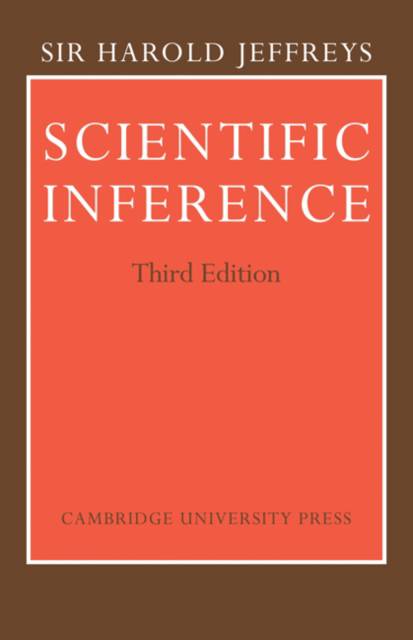
A scientific theory is originally based on a particular set of observations. How can it be extended to apply outside this original range of cases? This question, which is fundamental to natural philosophy, is considered in detail in this book, which was originally published in 1931, and first published as this third edition in 1973. Sir Harold begins with the principle that 'it is possible to learn from experience and to make inferences from beyond the data directly known to sensation'. He goes on to analyse this principle, discuss its status and investigate its logical consequences. The result is a book of importance to anyone interested in the foundations of modern scientific method. His thesis provides a consistent account of how the theories proposed by physicists have been derived from, and are supported by, experimental data.
Specificaties
Betrokkenen
- Auteur(s):
- Uitgeverij:
Inhoud
- Aantal bladzijden:
- 282
- Taal:
- Engels
Eigenschappen
- Productcode (EAN):
- 9780521180788
- Verschijningsdatum:
- 17/02/2011
- Uitvoering:
- Paperback
- Formaat:
- Trade paperback (VS)
- Afmetingen:
- 140 mm x 216 mm
- Gewicht:
- 358 g


Alleen bij Standaard Boekhandel
+ 161 punten op je klantenkaart van Standaard Boekhandel
Cadeau

AANGERADEN


Beoordelingen
We publiceren alleen reviews die voldoen aan de voorwaarden voor reviews. Bekijk onze voorwaarden voor reviews.