


- Afhalen na 1 uur in een winkel met voorraad
- Gratis thuislevering in België vanaf € 30
- Ruim aanbod met 7 miljoen producten
- Afhalen na 1 uur in een winkel met voorraad
- Gratis thuislevering in België vanaf € 30
- Ruim aanbod met 7 miljoen producten





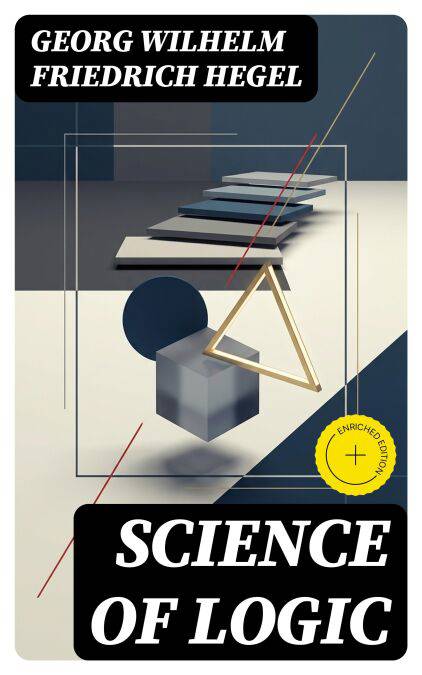
Science of Logic E-BOOK
Enriched edition. Dialectical Reasoning Through Being, Essence, and Notion in German Idealism
Georg Wilhelm Friedrich Hegel
E-book | Engels
€ 1,99
+ 1 punten
Uitvoering
Omschrijving
Georg Wilhelm Friedrich Hegel's "Science of Logic" is a profound exploration of the nature and development of logic as a dialectical process. Written in the early 19th century, the text reflects Hegel's philosophical project to reconcile ideas of contradiction and unity, where he meticulously dissects traditional logical structures. Employing a dense, yet methodical style, Hegel transforms logic from a mere tool for scientific inquiry into an organic system that captures the dynamic and evolving nature of reality itself. Notably, the work offers a systematic account of concepts such as being, essence, and notion, thus situating itself within the broader context of German Idealism. Hegel, a pivotal figure in Western philosophy, was deeply influenced by the tumultuous socio-political landscape of his time, particularly the aftermath of the French Revolution. His engagement with metaphysics and epistemology paved the way for this foundational work, as Hegel sought to articulate a comprehensive framework that accounted for human thought and its evolution in the face of historical development. His intellectual environment, steeped in Enlightenment ideals yet marked by emerging contradictions, directly shaped the themes present in "Science of Logic." This seminal work is recommended for readers keen on understanding the intricacies of Hegelian thought and its enduring impact on contemporary philosophy. With its ambitious scope and innovative treatment of logic, "Science of Logic" challenges readers to reconsider the relationship between thought and reality, making it an essential read for students of philosophy, logic, and even the social sciences.
In this enriched edition, we have carefully created added value for your reading experience:
- A succinct Introduction situates the work's timeless appeal and themes.
- The Synopsis outlines the central plot, highlighting key developments without spoiling critical twists.
- A detailed Historical Context immerses you in the era's events and influences that shaped the writing.
- An Author Biography reveals milestones in the author's life, illuminating the personal insights behind the text.
- A thorough Analysis dissects symbols, motifs, and character arcs to unearth underlying meanings.
- Reflection questions prompt you to engage personally with the work's messages, connecting them to modern life.
- Hand‐picked Memorable Quotes shine a spotlight on moments of literary brilliance.
- Interactive footnotes clarify unusual references, historical allusions, and archaic phrases for an effortless, more informed read.
In this enriched edition, we have carefully created added value for your reading experience:
- A succinct Introduction situates the work's timeless appeal and themes.
- The Synopsis outlines the central plot, highlighting key developments without spoiling critical twists.
- A detailed Historical Context immerses you in the era's events and influences that shaped the writing.
- An Author Biography reveals milestones in the author's life, illuminating the personal insights behind the text.
- A thorough Analysis dissects symbols, motifs, and character arcs to unearth underlying meanings.
- Reflection questions prompt you to engage personally with the work's messages, connecting them to modern life.
- Hand‐picked Memorable Quotes shine a spotlight on moments of literary brilliance.
- Interactive footnotes clarify unusual references, historical allusions, and archaic phrases for an effortless, more informed read.
Specificaties
Betrokkenen
- Auteur(s):
- Vertaler(s):
- Uitgeverij:
Inhoud
- Aantal bladzijden:
- 310
- Taal:
- Engels
Eigenschappen
- Productcode (EAN):
- 8596547388401
- Verschijningsdatum:
- 12/11/2022
- Uitvoering:
- E-book
- Beveiligd met:
- Digital watermarking
- Formaat:
- ePub


Alleen bij Standaard Boekhandel
+ 1 punten op je klantenkaart van Standaard Boekhandel
Cadeau

AANGERADEN


Beoordelingen
We publiceren alleen reviews die voldoen aan de voorwaarden voor reviews. Bekijk onze voorwaarden voor reviews.