


- Afhalen na 1 uur in een winkel met voorraad
- Gratis thuislevering in België vanaf € 30
- Ruim aanbod met 7 miljoen producten
- Afhalen na 1 uur in een winkel met voorraad
- Gratis thuislevering in België vanaf € 30
- Ruim aanbod met 7 miljoen producten





€ 98,45
+ 196 punten
Omschrijving
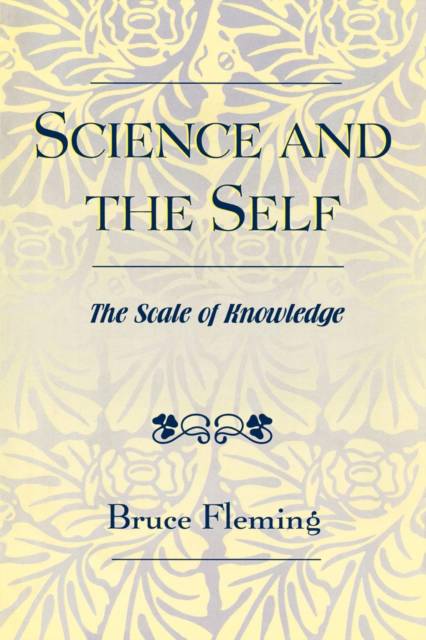
Science and the Self offers a fundamental re-conception of the relationship between science, a specific type of knowledge, and the other types of knowledge that are equally part of life. Those who practice science typically insist that it is objective, not subjective. Opposing them, philosophers such as Kuhn, Feyerabend, and Foucault-indeed, the very tenor of our times-emphasize science's subjective qualities. Science and the Self seeks to explain how reasonable people can hold either view. Offering an alternative to Robert Nozick's relativism, it argues that the world is objective. However it is so only because (and to the extent that) we subjective humans banish from its language the vast iceberg of things, which cannot be expressed in its terms. Most of daily life is composed of situational knowledge, which, unlike the scientific knowledge we may distill from it, is tied to the specific moment and place it arises in. Science and the Self offers a refreshing, coherent view that explains the nature of the self in the world, the nature of belief, and whether miracles are possible.
Specificaties
Betrokkenen
- Auteur(s):
- Uitgeverij:
Inhoud
- Aantal bladzijden:
- 184
- Taal:
- Engels
Eigenschappen
- Productcode (EAN):
- 9780761828440
- Verschijningsdatum:
- 15/03/2004
- Uitvoering:
- Paperback
- Formaat:
- Trade paperback (VS)
- Afmetingen:
- 152 mm x 229 mm
- Gewicht:
- 281 g


Alleen bij Standaard Boekhandel
+ 196 punten op je klantenkaart van Standaard Boekhandel
Cadeau

AANGERADEN


Beoordelingen
We publiceren alleen reviews die voldoen aan de voorwaarden voor reviews. Bekijk onze voorwaarden voor reviews.