


- Afhalen na 1 uur in een winkel met voorraad
- Gratis thuislevering in België vanaf € 30
- Ruim aanbod met 7 miljoen producten
- Afhalen na 1 uur in een winkel met voorraad
- Gratis thuislevering in België vanaf € 30
- Ruim aanbod met 7 miljoen producten





€ 12,99
+ 25 punten
Omschrijving
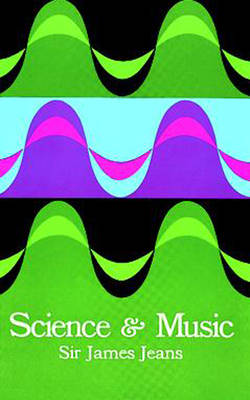
Sir James Jeans, noted British scientist, has given a physical analysis of musical sounds, in what is considered to be the best exposition on the subject, a book of great intellectual stature. His aim has been to convey precise information, in a simple non-technical way, that will be of interest to the amateur as well as the serious student of music.
The discussion begins with an explanation of the development of the human faculty of hearing. It is established that each sound can be represented by a curve. An examination of the general properties of sound-curves follows. For example, why do some sounds produce pleasure when they reach our ears and some pain? How do we retain the pleasurable qualities in the sound-curve, as it passes on from one stage of electronic equipment to another? To what extent is it possible to prevent unpleasant qualities from contaminating the curve? These and other pertinent questions on the transmission and reproduction of sound-curves are answered in a discussion of tuning-forks and pure tones. The various methods of producing sound, and the qualities of the sounds produced, are further discussed as they relate to vibrations of strings and harmonics, and vibrations of air. Harmony and discord are also considered. In the final chapters on the concert room and hearing, the discussion focuses on the transmission of sound from its source to the eardrum and from the eardrum to the brain. A general theory of acoustics is also covered as well as acoustical analyses.
"Science and Music is a rare book, as an author does not often combine very distinguished scientific abilities with musical knowledge and power of simple exposition. It will probably become a minor classic." -- Manchester Guardian.
The discussion begins with an explanation of the development of the human faculty of hearing. It is established that each sound can be represented by a curve. An examination of the general properties of sound-curves follows. For example, why do some sounds produce pleasure when they reach our ears and some pain? How do we retain the pleasurable qualities in the sound-curve, as it passes on from one stage of electronic equipment to another? To what extent is it possible to prevent unpleasant qualities from contaminating the curve? These and other pertinent questions on the transmission and reproduction of sound-curves are answered in a discussion of tuning-forks and pure tones. The various methods of producing sound, and the qualities of the sounds produced, are further discussed as they relate to vibrations of strings and harmonics, and vibrations of air. Harmony and discord are also considered. In the final chapters on the concert room and hearing, the discussion focuses on the transmission of sound from its source to the eardrum and from the eardrum to the brain. A general theory of acoustics is also covered as well as acoustical analyses.
"Science and Music is a rare book, as an author does not often combine very distinguished scientific abilities with musical knowledge and power of simple exposition. It will probably become a minor classic." -- Manchester Guardian.
Specificaties
Betrokkenen
- Auteur(s):
- Uitgeverij:
Inhoud
- Aantal bladzijden:
- 304
- Taal:
- Engels
- Reeks:
Eigenschappen
- Productcode (EAN):
- 9780486619644
- Verschijningsdatum:
- 1/06/1968
- Uitvoering:
- Paperback
- Formaat:
- Trade paperback (VS)
- Afmetingen:
- 135 mm x 213 mm
- Gewicht:
- 312 g


Alleen bij Standaard Boekhandel
+ 25 punten op je klantenkaart van Standaard Boekhandel
Cadeau

AANGERADEN


Beoordelingen
We publiceren alleen reviews die voldoen aan de voorwaarden voor reviews. Bekijk onze voorwaarden voor reviews.