



Je cadeautjes zeker op tijd in huis hebben voor de feestdagen? Kom langs in onze winkels en vind het perfecte geschenk!
- Afhalen na 1 uur in een winkel met voorraad
- Gratis thuislevering in België vanaf € 30
- Ruim aanbod met 7 miljoen producten
Je cadeautjes zeker op tijd in huis hebben voor de feestdagen? Kom langs in onze winkels en vind het perfecte geschenk!
- Afhalen na 1 uur in een winkel met voorraad
- Gratis thuislevering in België vanaf € 30
- Ruim aanbod met 7 miljoen producten





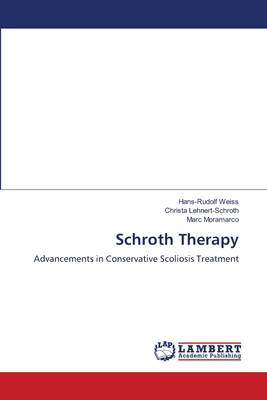
Schroth Therapy
Advancements in Conservative Scoliosis Treatment
Hans-Rudolf Weiss, Christa Lehnert-Schroth, Marc Moramarco
Paperback | Engels
€ 35,95
+ 71 punten
Omschrijving
Currently, there is the highest level of evidence for physiotherapy and bracing for scoliosis. In contrast, evidence for spinal fusion surgery remains questionable. Moreover, recent improvements in bracing now strive to improve curvature rather than merely stopping progression during the pubertal growth spurt. Adolescent patients can potentially achieve significant corrections via bracing and improve postural imbalances. Pattern-specific exercises, based on long-established Schroth methodology, have also been updated. Used during phases of significant growth velocity, patients have potential for improvement without surgery. 'Original Schroth' exercises, developed by Katharina Schroth, were initially for curvatures in excess of 90°. Schroth Best Practice(R) simplifies the exercises so adolescents, as well as adults, of all curve magnitudes can benefit. The protocols include new additions with respect to the sagittal profile. Patients acquire a new sense of postural awareness and are able to help themselves by learning to avoid curve-stimulating behaviors.
Specificaties
Betrokkenen
- Auteur(s):
- Uitgeverij:
Inhoud
- Aantal bladzijden:
- 288
- Taal:
- Engels
Eigenschappen
- Productcode (EAN):
- 9783659667954
- Verschijningsdatum:
- 20/03/2015
- Uitvoering:
- Paperback
- Formaat:
- Trade paperback (VS)
- Afmetingen:
- 152 mm x 229 mm
- Gewicht:
- 385 g


Alleen bij Standaard Boekhandel
+ 71 punten op je klantenkaart van Standaard Boekhandel
CADEAU


Beoordelingen
We publiceren alleen reviews die voldoen aan de voorwaarden voor reviews. Bekijk onze voorwaarden voor reviews.