


- Afhalen na 1 uur in een winkel met voorraad
- Gratis thuislevering in België vanaf € 30
- Ruim aanbod met 7 miljoen producten
- Afhalen na 1 uur in een winkel met voorraad
- Gratis thuislevering in België vanaf € 30
- Ruim aanbod met 7 miljoen producten





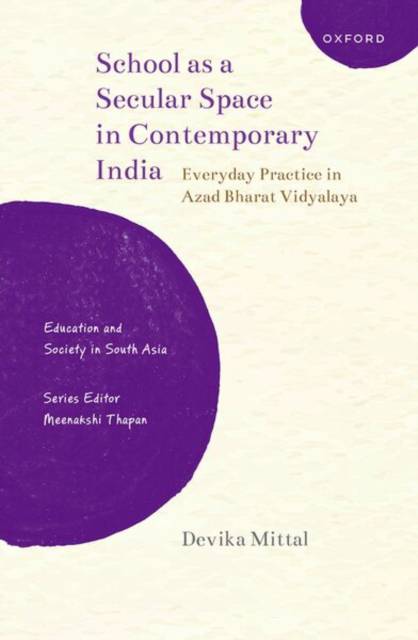
School as a Secular Space in Contemporary India
Everyday Practice in Azad Bharat Vidyalaya
Devika Mittal
€ 134,45
+ 268 punten
Omschrijving
The Constitution of India upholds secularism as a key ideal. Although the 42nd amendment to the Preamble to the Constitution officially declared India to be a 'sovereign, socialist, secular, democratic republic', the Constitution itself does not prescribe a specific definition of secularism. Given their close relationship with the State, Indian schools are expected to uphold Constitutional ideals, including secularism. School as a Secular Space in Contemporary India journeys into the life of a government-aided, non-religious school in Delhi to explore how the abstract concept of secularism is interpreted and enacted therein. Unpacking the school culture, this book offers insights into the nature of secularism in India. It reveals layers of conformity and contestation of the school's goals in general and its conception and practice of secularism in particular. The notion of secularism is interwoven with nationalism, religion, and community-based assertions, and grounded in the concepts of equality and social justice. Exploring the plural, and even competing, narratives of secularism emerging from these intersections, the author argues that these are not confined to the school alone but mirror the paradox of secularism in the Indian society.
Specificaties
Betrokkenen
- Auteur(s):
- Uitgeverij:
Inhoud
- Aantal bladzijden:
- 240
- Taal:
- Engels
- Reeks:
Eigenschappen
- Productcode (EAN):
- 9780198993605
- Verschijningsdatum:
- 30/09/2026
- Uitvoering:
- Hardcover
- Formaat:
- Genaaid
- Afmetingen:
- 140 mm x 216 mm



Alleen bij Standaard Boekhandel
+ 268 punten op je klantenkaart van Standaard Boekhandel
AANGERADEN


Beoordelingen
We publiceren alleen reviews die voldoen aan de voorwaarden voor reviews. Bekijk onze voorwaarden voor reviews.