



- Afhalen na 1 uur in een winkel met voorraad
- In januari gratis thuislevering in België
- Ruim aanbod met 7 miljoen producten
- Afhalen na 1 uur in een winkel met voorraad
- In januari gratis thuislevering in België
- Ruim aanbod met 7 miljoen producten





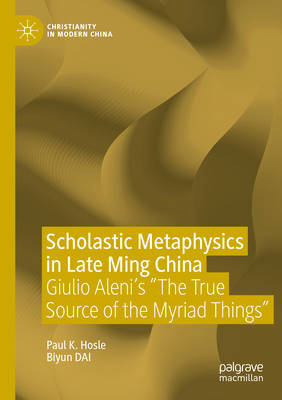
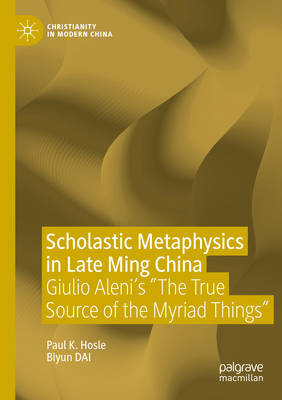
Scholastic Metaphysics in Late Ming China
Giulio Aleni's the True Source of the Myriad Things
Paul K Hosle, Biyun Dai
€ 76,45
+ 152 punten
Omschrijving
This book provides the first complete English translation of Giulio Aleni's Wanwu Zhenyuan 萬物真原 ('The True Source of the Myriad Things'). Aleni is one of the most important Jesuit missionaries to China, as is evidenced by the fact that he was reverentially called already during his lifetime 'Confucius from the West'. Aleni's work, first published in 1628, offers precious insight into the ways in which he tried to communicate Western philosophical notions to Confucian literati, arguing that only God can be the ultimate source of the world. In our introduction, we situate this work within Aleni's life and analyze the argument of the text. We discuss the Scholastic framework that Aleni uses in his attempt to prove God's existence, as well as his arguments against competing positions from native Chinese philosophical traditions, particularly Neo-Confucianism. We also emphasize the importance that Aleni gives to reason as the best possible means of intercultural communication. Moreover, we have provided numerous annotations to the translation that identify references, provide historical and philosophical contextualization, and otherwise aid in the appreciation and elucidation of the work. This book provides an essential step to render this significant text more accessible to a wider readership interested in Jesuit missionary history and indeed more broadly in cross-cultural dialogue, and it will also serve as a vital tool for future scholarly research on Aleni's oeuvre.
Specificaties
Betrokkenen
- Auteur(s):
- Uitgeverij:
Inhoud
- Aantal bladzijden:
- 94
- Taal:
- Engels
- Reeks:
Eigenschappen
- Productcode (EAN):
- 9789819777150
- Verschijningsdatum:
- 26/11/2025
- Uitvoering:
- Paperback
- Formaat:
- Trade paperback (VS)
- Afmetingen:
- 148 mm x 210 mm


Alleen bij Standaard Boekhandel
+ 152 punten op je klantenkaart van Standaard Boekhandel
Cadeau

AANGERADEN


Beoordelingen
We publiceren alleen reviews die voldoen aan de voorwaarden voor reviews. Bekijk onze voorwaarden voor reviews.