


- Afhalen na 1 uur in een winkel met voorraad
- Gratis thuislevering in België vanaf € 30
- Ruim aanbod met 7 miljoen producten
- Afhalen na 1 uur in een winkel met voorraad
- Gratis thuislevering in België vanaf € 30
- Ruim aanbod met 7 miljoen producten





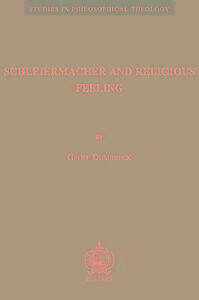
Schleiermacher and Religious Feeling
G Dumbreck
€ 52,00
+ 104 punten
Omschrijving
Religious feeling lies at the heart of Schleiermacher's theology. In his earliest monograph, the Speeches, he famously writes that "religion's essence is neither thinking nor acting but intuition and feeling." He portrays religious feeling as an eternal and universal state of consciousness, which cannot be generated by individuals, the world or anything within it, but must have a transcendent "whence", namely God. Yet his critics have often missed this point, assuming that his emphasis on feeling makes religion transitory and individualistic. This misinterpretation is furthered by philosophical, psychological, anthropological and popular understandings of feeling, which characterise emotions as selfish and moods as inward looking.This book traces the development of Schleiermacher's concept of feeling, comparing the first edition of the Speeches with his later works, especially The Christian Faith. It points to a fundamental continuity in Schleiermacher's stance, despite the increasing orthodoxy of his language, and his growing interest in the collective feeling of the religious community. Taking account of recent developments in psychology and philosophy, this study sheds light on the elements of Schleiermacher's account that are tenable today, clearing the way for future reappraisals of his theological project.
Specificaties
Betrokkenen
- Auteur(s):
- Uitgeverij:
Inhoud
- Aantal bladzijden:
- 253
- Taal:
- Engels
- Reeks:
- Reeksnummer:
- nr. 49
Eigenschappen
- Productcode (EAN):
- 9789042925670
- Verschijningsdatum:
- 22/03/2012
- Uitvoering:
- Paperback
- Formaat:
- Trade paperback (VS)
- Afmetingen:
- 160 mm x 239 mm
- Gewicht:
- 385 g


Alleen bij Standaard Boekhandel
+ 104 punten op je klantenkaart van Standaard Boekhandel
Cadeau

AANGERADEN


Beoordelingen
We publiceren alleen reviews die voldoen aan de voorwaarden voor reviews. Bekijk onze voorwaarden voor reviews.