


- Afhalen na 1 uur in een winkel met voorraad
- Gratis thuislevering in België vanaf € 30
- Ruim aanbod met 7 miljoen producten
- Afhalen na 1 uur in een winkel met voorraad
- Gratis thuislevering in België vanaf € 30
- Ruim aanbod met 7 miljoen producten





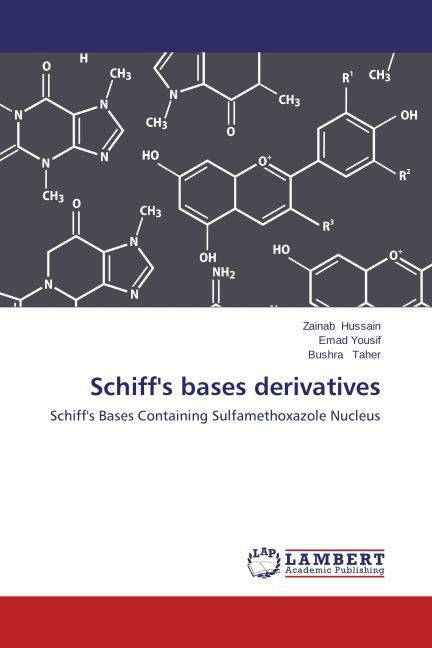
Schiff's bases derivatives
Schiff's Bases Containing Sulfamethoxazole Nucleus
Zainab Hussain, Emad Yousif, Bushra Taher
Paperback | Engels
€ 35,45
+ 70 punten
Omschrijving
Schiff's bases are the compounds, which contain C=N- group. These compounds were named after the German chemist Hugo Schiff and are produced by reacting the aldehyde or ketone with primary amines (1), Structurally, a Schiff base (also known as imine or azomethine or anils is a nitrogen analogue of an aldehyde or ketone in which the carbonyl group (C O) has been replaced by an imine or azomethine group. Schiff bases are some of the most widely used organic compounds. They are used as pigments and dyes, catalysts, intermediates in organic synthesis, and as polymer stabilisers. Schiff bases are reported to show a wide range of pharmacological activities and are used as antimicrobial agents with the activities including antibacterial, anti-fungal, anti-malarial and anti-viral agents as well as the anti-inflammatory, antioxidant and anti-cancerous agents. Imine or azomethine groups are present in various natural, natural-derived, and non-natural compounds. Pharmacological activities attributed by Schiff bases are mainly due to characteristic C=N functionality
Specificaties
Betrokkenen
- Auteur(s):
- Uitgeverij:
Inhoud
- Aantal bladzijden:
- 60
- Taal:
- Engels
Eigenschappen
- Productcode (EAN):
- 9783659680014
- Verschijningsdatum:
- 23/01/2015
- Uitvoering:
- Paperback
- Afmetingen:
- 150 mm x 220 mm
- Gewicht:
- 100 g



Alleen bij Standaard Boekhandel
+ 70 punten op je klantenkaart van Standaard Boekhandel
Cadeau

AANGERADEN


Beoordelingen
We publiceren alleen reviews die voldoen aan de voorwaarden voor reviews. Bekijk onze voorwaarden voor reviews.