


- Afhalen na 1 uur in een winkel met voorraad
- Gratis thuislevering in België vanaf € 30
- Ruim aanbod met 7 miljoen producten
- Afhalen na 1 uur in een winkel met voorraad
- Gratis thuislevering in België vanaf € 30
- Ruim aanbod met 7 miljoen producten





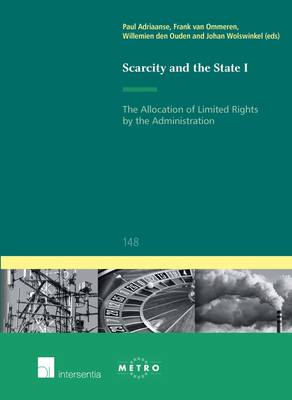
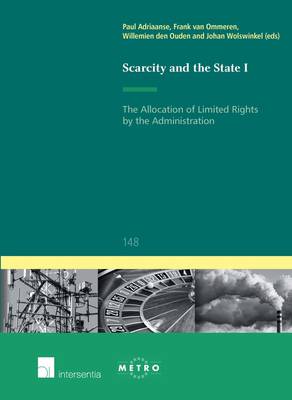
Scarcity and the State
The Allocation of Limited Rights by the Administration Volume 148
Adriaanse Paul C
€ 113,00
+ 226 punten
Eenvoudig bestellen
Veilig betalen


Gratis thuislevering vanaf € 30 (via bpost)
Gratis levering in je Standaard Boekhandel
Omschrijving
Managing scarcity to serve the public interest is a classic government task. An important way to execute this task is by allocating individual rights that are only available in limited quantities, such as CO2 emission allowances, gambling licences, subsidies, radio frequencies, public contracts and parking permits. Whereas economic and political theory has paid much attention to the allocation of scarce goods and rights, until now a consistent and general legal theory of 'the allocating government' has been missing. This is striking given the fact that limited rights have to be allocated within many sectors and are often of great social significance and financial importance. Decisions on allocation often lead to disputes. This book provides a unique exploration of building blocks for a consistent and general legal theory on the allocation of limited rights by administrative authorities. This book is useful to legislators, administrative authorities, applicants, interested third parties and the courts. The EU-law perspective is an important element in this book, but comparative law and doctrinal approaches are also taken into account. The contributions in this book have been enriched by information from national reports on the allocation of gambling licences, radio frequencies and CO2 emission permits in seven EU Member States: France, Germany, Greece, Italy, the Netherlands, Romania and Spain. (See P. Adriaanse, F. van Ommeren, W. den Ouden and J. Wolswinkel (eds.), Scarcity and the State II. Member State Reports on Gambling Licences, Radio Frequencies and CO2 Emission Permits, Intersentia, Antwerp 2016).
Specificaties
Betrokkenen
- Auteur(s):
- Uitgeverij:
Inhoud
- Aantal bladzijden:
- 356
- Taal:
- Engels
- Reeks:
- Reeksnummer:
- nr. 148
Eigenschappen
- Productcode (EAN):
- 9781780683478
- Verschijningsdatum:
- 24/03/2016
- Uitvoering:
- Paperback
- Formaat:
- Trade paperback (VS)
- Afmetingen:
- 172 mm x 236 mm
- Gewicht:
- 666 g


Alleen bij Standaard Boekhandel
+ 226 punten op je klantenkaart van Standaard Boekhandel
CADEAU

AANGERADEN


Beoordelingen
We publiceren alleen reviews die voldoen aan de voorwaarden voor reviews. Bekijk onze voorwaarden voor reviews.