



Je cadeautjes zeker op tijd in huis hebben voor de feestdagen? Kom langs in onze winkels en vind het perfecte geschenk!
- Afhalen na 1 uur in een winkel met voorraad
- Gratis thuislevering in België vanaf € 30
- Ruim aanbod met 7 miljoen producten
Je cadeautjes zeker op tijd in huis hebben voor de feestdagen? Kom langs in onze winkels en vind het perfecte geschenk!
- Afhalen na 1 uur in een winkel met voorraad
- Gratis thuislevering in België vanaf € 30
- Ruim aanbod met 7 miljoen producten





Omschrijving
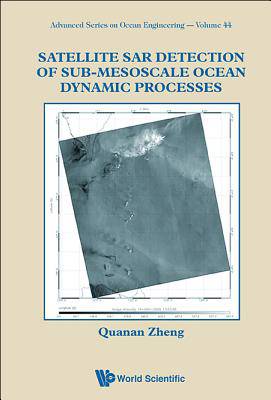
Synthetic-aperture radar (SAR) as a form of radar to create images of objects, uses the motion of the radar antenna over a targeted region to provide finer spatial resolution than is possible with conventional beam-scanning radars by mounting the antenna on a moving platform such as an aircraft or spacecraft. As antenna aperture (the 'size' of the antenna) is defined by the distance the SAR device travels over a target in the time taken for the radar pulses to return to the antenna, the larger the aperture is, the higher the image resolution, therefore, this enables SAR to create high resolution images with comparatively small physical antennas.This special book aims to provide the updated theories and methods for the use of synthetic aperture radar (SAR) onboard satellites to detect ocean processes, i.e., SAR ocean remote sensing. It is a hi-tech application field having been developed since late 1970s and become a powerful tool for obtaining dynamic signatures from the remote and broad ocean.
Specificaties
Betrokkenen
- Auteur(s):
- Uitgeverij:
Inhoud
- Aantal bladzijden:
- 348
- Taal:
- Engels
- Reeks:
- Reeksnummer:
- nr. 44
Eigenschappen
- Productcode (EAN):
- 9789814749008
- Verschijningsdatum:
- 23/05/2017
- Uitvoering:
- Hardcover
- Formaat:
- Genaaid
- Afmetingen:
- 157 mm x 231 mm
- Gewicht:
- 680 g


Alleen bij Standaard Boekhandel
+ 421 punten op je klantenkaart van Standaard Boekhandel
CADEAU


Beoordelingen
We publiceren alleen reviews die voldoen aan de voorwaarden voor reviews. Bekijk onze voorwaarden voor reviews.