


- Afhalen na 1 uur in een winkel met voorraad
- Gratis thuislevering in België vanaf € 30
- Ruim aanbod met 7 miljoen producten
- Afhalen na 1 uur in een winkel met voorraad
- Gratis thuislevering in België vanaf € 30
- Ruim aanbod met 7 miljoen producten




Omschrijving
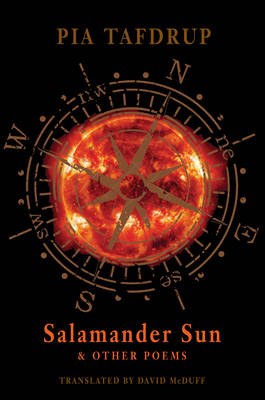
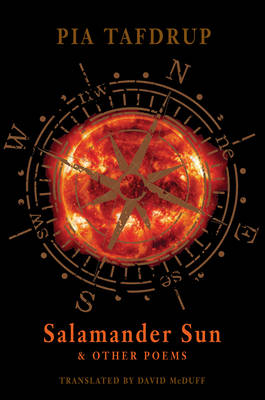
Pia Tafdrup is one of Denmark's leading poets. She has received the Nordic Literature Prize - Scandinavia's most prestigious literary award - and the Swedish Academy's Nordic Prize. This new translation of her work combines two recent collections, The Migrant Bird's Compass and Salamander Sun, which comprise the third and fourth parts of a quartet written over ten years: the first two parts are The Whales in Paris and Tarkovsky's Horses (published in English by Bloodaxe in 2010 as Tarkovsky's Horses and other poems). The Migrant Bird's Compass is a book of poems about the dimensions of travel, either to specific countries or as an inner journey. The route from birth to death is also portrayed. Travel demands commitment and curiosity. The only predictable thing about it is the unpredictable. Travel implies vulnerability, but also much that has happened at home while one was away. The poems are about the experience of 'resting in myself / despite the fire in the centre of the earth'. Salamander Sun presents 60 poems, one for each year, from 1952, when Pia Tafdrup was born, to 2011; from the first chaotic sensations, through the gradual discovery of the world and its diversity, and of language, its possibilities and challenges; from growing up on a farm, puberty, study, politics, love, to becoming a poet, having two sons, getting older and having old parents; to leaving one's mark and understanding one's place in the passage of time. The poems cast light backwards, but also seek a focus in the future. Together with The Whales in Paris and Tarkovsky's Horses the two books form a quartet that centres on the theme of journeying and passage, its individual parts creating a field of tension. Each part portrays an element: water, earth, air and fire, each represented by a creature, and each part has a key figure: the beloved person, the father, the mother and the "I" that recalls its life. The quartet is an attempt to find structure in the midst of chaos.
Specificaties
Betrokkenen
- Auteur(s):
- Vertaler(s):
- Uitgeverij:
Inhoud
- Aantal bladzijden:
- 176
- Taal:
- Engels
Eigenschappen
- Productcode (EAN):
- 9781780371504
- Verschijningsdatum:
- 25/01/2015
- Uitvoering:
- Paperback
- Formaat:
- Trade paperback (VS)
- Afmetingen:
- 155 mm x 234 mm
- Gewicht:
- 317 g


Alleen bij Standaard Boekhandel
+ 33 punten op je klantenkaart van Standaard Boekhandel
CADEAU


Beoordelingen
We publiceren alleen reviews die voldoen aan de voorwaarden voor reviews. Bekijk onze voorwaarden voor reviews.