


- Afhalen na 1 uur in een winkel met voorraad
- Gratis thuislevering in België vanaf € 30
- Ruim aanbod met 7 miljoen producten
- Afhalen na 1 uur in een winkel met voorraad
- Gratis thuislevering in België vanaf € 30
- Ruim aanbod met 7 miljoen producten





€ 45,45
+ 90 punten
Uitvoering
Omschrijving
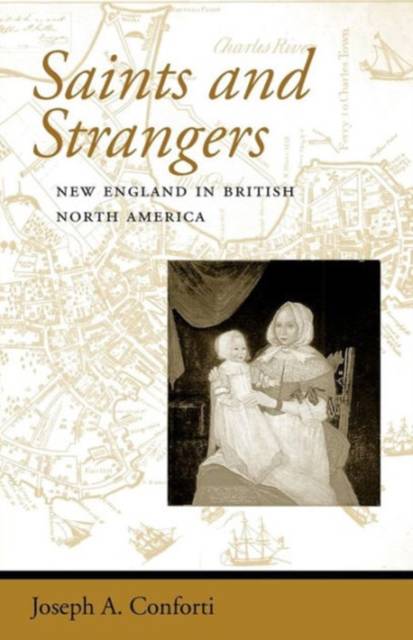
In the first general history of colonial New England to be published in over twenty-five years, Joseph A. Conforti synthesizes current and classic scholarship to explore how Puritan saints and "strangers" to Puritanism participated in the making of colonial New England. Massachusetts Governor John Winthrop's famous description of New England as a "city upon a hill" has tended to reduce the region's history to an exclusively Pilgrim-Puritan drama, a world of narrow-minded founders, the First Thanksgiving, steepled churches, and the Salem witchcraft trials. In a concise volume aimed at general readers and college students as well as historians, Conforti shows that New England was neither as Puritan nor as insular as most familiar stories imply. As the region evolved into British America's preeminent maritime region, the Atlantic Ocean served as a highway of commercial and cultural encounter, connecting white English settlers to different races and religious communities of the transatlantic world. The Puritan elect-but also Natives, African slaves, and non-Puritan white settlers-became active participants in the creation of colonial New England. Conforti discusses how these subcommunities of white, red, and black strangers to Protestant piety retained their own cultures, coexisted, and even thrived within and beyond the domains of Puritan settlement, creating tensions and pressure points in the later development of early America.
Specificaties
Betrokkenen
- Auteur(s):
- Uitgeverij:
Inhoud
- Aantal bladzijden:
- 248
- Taal:
- Engels
- Reeks:
Eigenschappen
- Productcode (EAN):
- 9780801882548
- Verschijningsdatum:
- 1/12/2005
- Uitvoering:
- Paperback
- Formaat:
- Trade paperback (VS)
- Afmetingen:
- 138 mm x 193 mm
- Gewicht:
- 294 g



Alleen bij Standaard Boekhandel
+ 90 punten op je klantenkaart van Standaard Boekhandel
Cadeau

AANGERADEN


Beoordelingen
We publiceren alleen reviews die voldoen aan de voorwaarden voor reviews. Bekijk onze voorwaarden voor reviews.