


- Afhalen na 1 uur in een winkel met voorraad
- Gratis thuislevering in België vanaf € 30
- Ruim aanbod met 7 miljoen producten
- Afhalen na 1 uur in een winkel met voorraad
- Gratis thuislevering in België vanaf € 30
- Ruim aanbod met 7 miljoen producten





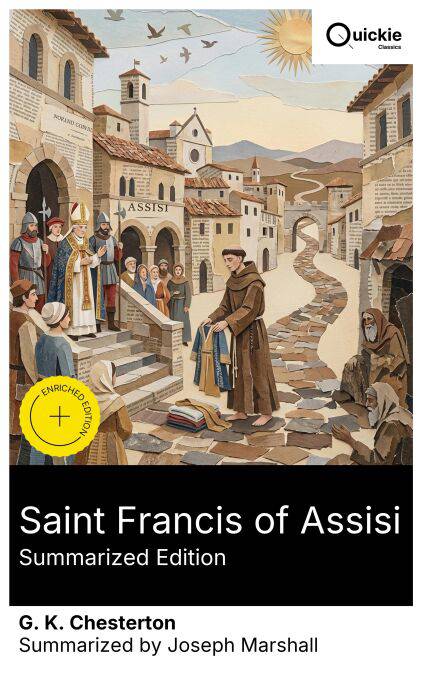
Saint Francis of Assisi (Summarized Edition) E-BOOK
Enriched edition. Religious biography from medieval Italy: a paradoxical saint's asceticism and mystical spirituality in historical perspective
G. K. Chesterton
E-book | Engels
€ 0,49
Omschrijving
G. K. Chesterton's Saint Francis of Assisi is not a ledger of facts but a luminous interpretive life, weaving history, theology, and wit. From the public renunciation before the bishop to leper‑care, the Canticle of the Creatures, the founding of the Friars Minor, and the audience with the Sultan, Francis emerges as joy made credible. The prose is brisk and baroque, studded with paradox that opposes both Victorian sentimentality and modern utilitarianism. Written amid renewed interest in medieval spirituality, the book recasts sanctity as radical gratitude toward creation. A journalist, poet, and polemicist, Chesterton wrote the book in 1923, scarcely a year after his reception into the Catholic Church. His conversion, distributist social thought, and long critique of materialism supply the lens: Francis appears as a joyous rebel restoring proportion to the world. Imagination over archive, he crafts a theological psychology. Students of literary biography, Christian spirituality, and cultural criticism will find this bracing. Newcomers gain an accessible doorway to medieval holiness; seasoned readers will relish Chesterton's audacity. For those seeking a humanely joyful alternative to cynicism, this book offers freedom rooted in gratitude.
Quickie Classics summarizes timeless works with precision, preserving the author's voice and keeping the prose clear, fast, and readable—distilled, never diluted. Enriched Edition extras: Introduction · Synopsis · Historical Context · Author Biography · Brief Analysis · 4 Reflection Q&As · Editorial Footnotes.
Quickie Classics summarizes timeless works with precision, preserving the author's voice and keeping the prose clear, fast, and readable—distilled, never diluted. Enriched Edition extras: Introduction · Synopsis · Historical Context · Author Biography · Brief Analysis · 4 Reflection Q&As · Editorial Footnotes.
Specificaties
Betrokkenen
- Auteur(s):
- Uitgeverij:
Inhoud
- Aantal bladzijden:
- 79
- Taal:
- Engels
Eigenschappen
- Productcode (EAN):
- 8596547878797
- Verschijningsdatum:
- 9/01/2026
- Uitvoering:
- E-book
- Beveiligd met:
- Digital watermarking
- Formaat:
- ePub


Alleen bij Standaard Boekhandel
Cadeau

AANGERADEN


Beoordelingen
We publiceren alleen reviews die voldoen aan de voorwaarden voor reviews. Bekijk onze voorwaarden voor reviews.