


- Afhalen na 1 uur in een winkel met voorraad
- Gratis thuislevering in België vanaf € 30
- Ruim aanbod met 7 miljoen producten
- Afhalen na 1 uur in een winkel met voorraad
- Gratis thuislevering in België vanaf € 30
- Ruim aanbod met 7 miljoen producten





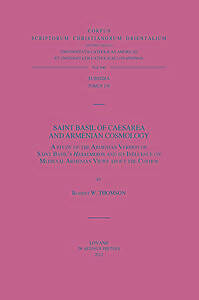
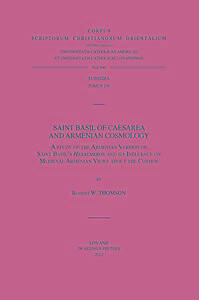
Saint Basil of Caesarea and Armenian Cosmology
A Study of the Armenian Version of Saint Basil's Hexaemeron and Its Influence on Medieval Armenian Views about the Cosmos
Rw Thomson
€ 77,00
+ 154 punten
Eenvoudig bestellen
Veilig betalen


Gratis thuislevering vanaf € 30 (via bpost)
Gratis levering in je Standaard Boekhandel
Omschrijving
The Hexaemeron by St Basil of Caesarea was a fundamental source for Christian writers describing the nature of the physical cosmos, not least in Armenia, where scholars attempted to reconcile theories derived from Greek antiquity with the Bible. The first part of this volume is a survey of references to Basil in Armenian writers from the fifth to the fourteenth centuries, and more particularly of the influence of the Hexaemeron on their cosmology. The second part is an English translation of the Armenian version. The commentary to the translation identifies the expansions and changes made by the Armenian translator, and justifies numerous divergences from the text of the critical edition [Erevan 1984] in favour of readings also attested in the Syriac version [Leuven 1995, CSCO 550], for the Armenian derives from the latter, not directly from the Greek. There are detailed Indices for the Armenian, Greek, Syriac and Latin sources quoted, the Armenian technical terms, and the topics discussed by Basil. The translations of the Hexaemeron in Syriac, Armenian, Arabic, Georgian and Old Slavonic contain only the original nine homilies, not the further two on the creation of man later added by Basil's brother, Gregory of Nyssa.
Specificaties
Betrokkenen
- Auteur(s):
- Uitgeverij:
Inhoud
- Aantal bladzijden:
- 289
- Taal:
- Engels
- Reeks:
- Reeksnummer:
- nr. 646
Eigenschappen
- Productcode (EAN):
- 9789042926288
- Verschijningsdatum:
- 5/06/2012
- Uitvoering:
- Paperback
- Formaat:
- Trade paperback (VS)
- Gewicht:
- 221 g


Alleen bij Standaard Boekhandel
+ 154 punten op je klantenkaart van Standaard Boekhandel
CADEAU

AANGERADEN


Beoordelingen
We publiceren alleen reviews die voldoen aan de voorwaarden voor reviews. Bekijk onze voorwaarden voor reviews.