



Bedankt voor het vertrouwen het afgelopen jaar! Om jou te bedanken bieden we GRATIS verzending (in België) aan op alles gedurende de hele maand januari.
- Afhalen na 1 uur in een winkel met voorraad
- In januari gratis thuislevering in België
- Ruim aanbod met 7 miljoen producten
Bedankt voor het vertrouwen het afgelopen jaar! Om jou te bedanken bieden we GRATIS verzending (in België) aan op alles gedurende de hele maand januari.
- Afhalen na 1 uur in een winkel met voorraad
- In januari gratis thuislevering in België
- Ruim aanbod met 7 miljoen producten





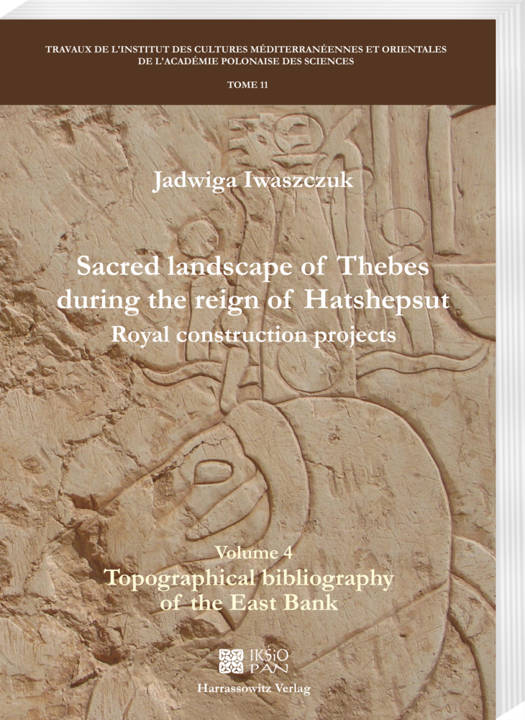
Sacred Landscape of Thebes During the Reign of Hatshepsut.Royal Construction Projects. Volume 4
Topographical Bibliography of the East Bank
Jadwiga Iwaszczuk
Paperback | Engels | Travaux de l'Institut des Cultures Méditerranéennes et Orientales de l'Académie Polonaise des Sciences | nr. 11
€ 174,95
+ 349 punten
Omschrijving
The publication is an attempt to reconstruct the ritual landscape and the interrelationship of sacred buildings in the area of Eastern Thebes during the reign of Queen Hatshepsut. It collects and analyzes the sites of building activity of this period, their structure and functioning, and reconstructs the extent of changes introduced by the queen in this area. An important task of the publication is to correct misleading interpretations accrued in the literature. The results of the study indicate the great transformations introduced by the queen in Egypt. During her reign, the reconstruction of most of the sacred buildings began, finalized by her co-regent and successor, Thutmose III. During the reign of the queen, climatic hazards were recognized, and thanks to the measures taken, the destruction of the temples was avoided by their complete rebuilding in a durable material, i.e. sandstone. Building and ritual activities were very much influenced by the wealth of the state, it allowed cult activity to rise to previously unknown proportions. It was during Hatshepsut's reign that the sacred landscape of Thebes was created, which survives to this day. The entire area of Thebes was linked together by economic, administrative and ritual relations. Hatshepsut introduced the great processional festivals of Thebes and created the infrastructure for celebrating them.
Specificaties
Betrokkenen
- Auteur(s):
- Uitgeverij:
Inhoud
- Aantal bladzijden:
- 318
- Taal:
- Engels
- Reeks:
- Reeksnummer:
- nr. 11
Eigenschappen
- Productcode (EAN):
- 9783447118156
- Verschijningsdatum:
- 9/08/2023
- Uitvoering:
- Paperback
- Formaat:
- Trade paperback (VS)
- Afmetingen:
- 210 mm x 297 mm
- Gewicht:
- 1233 g


Alleen bij Standaard Boekhandel
+ 349 punten op je klantenkaart van Standaard Boekhandel
SOLDEN


Beoordelingen
We publiceren alleen reviews die voldoen aan de voorwaarden voor reviews. Bekijk onze voorwaarden voor reviews.