


- Afhalen na 1 uur in een winkel met voorraad
- Gratis thuislevering in België vanaf € 30
- Ruim aanbod met 7 miljoen producten
- Afhalen na 1 uur in een winkel met voorraad
- Gratis thuislevering in België vanaf € 30
- Ruim aanbod met 7 miljoen producten





€ 116,60
+ 233 punten
Omschrijving
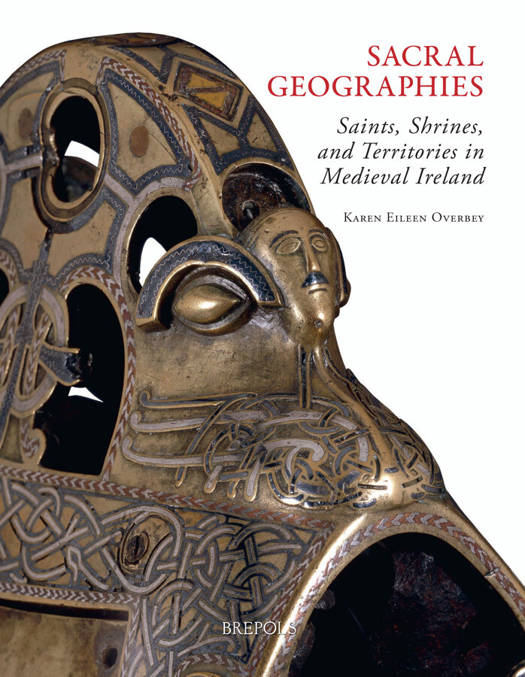
More than merely containers for holy bodies and objects, reliquaries powerfully mediated the experience of holy objects for their medieval audiences, creating socially charged spaces. Sacral Geographies: Saints, Shrines and Territory in Medieval Ireland demonstrates how the sacred space of reliquaries intersected with the territorial spaces of secular kingship, with the hierarchical spaces of monastic enclosures, and with the devotional spaces of cultic communities. The patrons of reliquaries, usually prominent secular rulers or Church leaders, employed performance, ritual and narrative (both visual and textual) to reinforce the efficacy of relics and, consequently, to authorize political relationships. The space of the 'holy body' therefore functioned as a foundation for the social geographies of early Ireland.Sacral Geographies explores the role of reliquaries such as the Domnach Airgid book shrine, the Shrine of St Brigid's Shoe, and St Manchan's Shrine in the construction of spatial identity in early Ireland. While chapters on tomb-shaped shrines and crozier-relics appraise connections between Continental and Irish forms, and the effect of localized political agendas on material traditions, this book locates Irish spatial practices in an insular context, positing an Irish 'topographical consciousness.'
Specificaties
Betrokkenen
- Auteur(s):
- Uitgeverij:
Inhoud
- Aantal bladzijden:
- 278
- Taal:
- Engels
- Reeks:
- Reeksnummer:
- nr. 2
Eigenschappen
- Productcode (EAN):
- 9782503527673
- Verschijningsdatum:
- 30/05/2012
- Uitvoering:
- Hardcover
- Formaat:
- Genaaid
- Afmetingen:
- 218 mm x 282 mm
- Gewicht:
- 1378 g


Alleen bij Standaard Boekhandel
+ 233 punten op je klantenkaart van Standaard Boekhandel
Cadeau

AANGERADEN


Beoordelingen
We publiceren alleen reviews die voldoen aan de voorwaarden voor reviews. Bekijk onze voorwaarden voor reviews.