


- Afhalen na 1 uur in een winkel met voorraad
- Gratis thuislevering in België vanaf € 30
- Ruim aanbod met 7 miljoen producten
- Afhalen na 1 uur in een winkel met voorraad
- Gratis thuislevering in België vanaf € 30
- Ruim aanbod met 7 miljoen producten





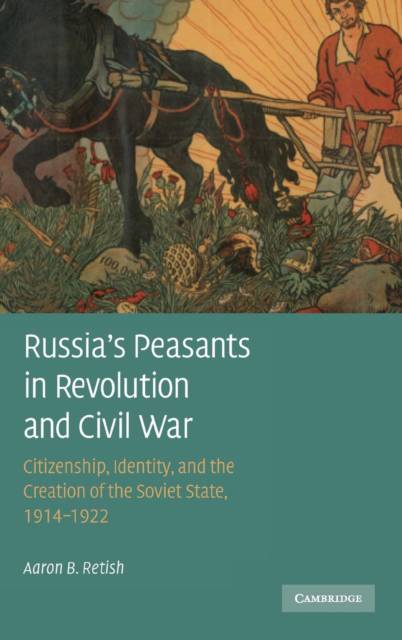
Russia's Peasants in Revolution and Civil War
Citizenship, Identity, and the Creation of the Soviet State, 1914–1922
Aaron B Retish
Hardcover | Engels
€ 183,45
+ 366 punten
Uitvoering
Omschrijving
How did peasants experience and help guide Russia's war, revolution, and civil war? Why in the end did most agree to live as part of the Bolshevik regime? Taking the First World War to the end of the Civil War as a unified era of revolution, this book shows how peasant society and peasants' conceptions of themselves as citizens in the nation evolved in a period of total war, mass revolutionary politics, and civil breakdown. Aaron Retish reveals that the fateful decision by individuals to join the Revolution or to accommodate their lifestyle within it gave the Bolsheviks the resources and philosophical foundation on which to build the Soviet experiment and reshape international politics. He argues that peasants wanted more than land from the Revolution; they wanted to be active citizens. This is an important contribution to our understanding of the nature of the Russian Revolution and peasant-state relations.
Specificaties
Betrokkenen
- Auteur(s):
- Uitgeverij:
Inhoud
- Aantal bladzijden:
- 310
- Taal:
- Engels
Eigenschappen
- Productcode (EAN):
- 9780521896894
- Verschijningsdatum:
- 28/08/2008
- Uitvoering:
- Hardcover
- Formaat:
- Genaaid
- Afmetingen:
- 150 mm x 229 mm
- Gewicht:
- 635 g


Alleen bij Standaard Boekhandel
+ 366 punten op je klantenkaart van Standaard Boekhandel
Cadeau

AANGERADEN


Beoordelingen
We publiceren alleen reviews die voldoen aan de voorwaarden voor reviews. Bekijk onze voorwaarden voor reviews.