


- Afhalen na 1 uur in een winkel met voorraad
- Gratis thuislevering in België vanaf € 30
- Ruim aanbod met 7 miljoen producten
- Afhalen na 1 uur in een winkel met voorraad
- Gratis thuislevering in België vanaf € 30
- Ruim aanbod met 7 miljoen producten





€ 69,45
+ 138 punten
Omschrijving
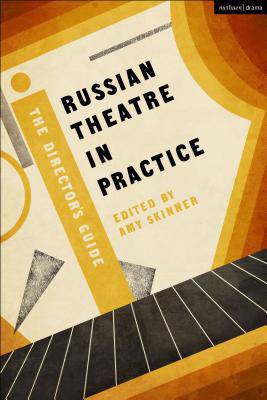
Amidst the turmoil of political revolution, the stage directors of twentieth-century Russia rewrote the rules of theatre making. From realism to the avant-garde, politics to postmodernism, and revolution to repression, these practitioners shaped perceptions of theatre direction across the world.
This edited volume introduces students and practitioners alike to the innovations of Russia's directors, from Konstantin Stanislavsky and Vsevolod Meyerhold to Anatoly Efros, Oleg Efremov and Genrietta Ianovskaia. Strongly practical in its approach, Russian Theatre in Practice: The Director's Guide equips readers with an understanding of the varying approaches of each director, as well as the opportunity to participate and explore their ideas in practice. The full range of the director's role is covered, including work on text, rehearsal technique, space and proxemics, audience theory and characterization. Each chapter focuses on one director, exploring their historical context, and combining an examination of their directing theory and technique with practical exercises for use in classroom or rehearsal settings. Through their ground-breaking ideas and techniques, Russia's directors still demand our attention, and in this volume they come to life as a powerful resource for today's theatre makers.Specificaties
Betrokkenen
- Uitgeverij:
Inhoud
- Aantal bladzijden:
- 296
- Taal:
- Engels
- Reeks:
Eigenschappen
- Productcode (EAN):
- 9781474284417
- Verschijningsdatum:
- 18/04/2019
- Uitvoering:
- Paperback
- Formaat:
- Trade paperback (VS)
- Afmetingen:
- 155 mm x 234 mm
- Gewicht:
- 476 g

Alleen bij Standaard Boekhandel
+ 138 punten op je klantenkaart van Standaard Boekhandel
Cadeau

AANGERADEN


Beoordelingen
We publiceren alleen reviews die voldoen aan de voorwaarden voor reviews. Bekijk onze voorwaarden voor reviews.