


- Afhalen na 1 uur in een winkel met voorraad
- Gratis thuislevering in België vanaf € 30
- Ruim aanbod met 7 miljoen producten
- Afhalen na 1 uur in een winkel met voorraad
- Gratis thuislevering in België vanaf € 30
- Ruim aanbod met 7 miljoen producten





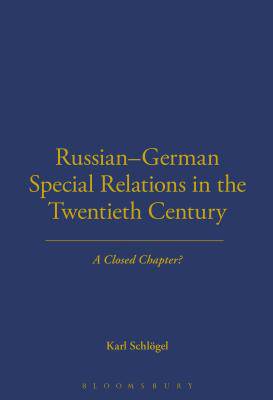
Russian-German Special Relations in the Twentieth Century
A Closed Chapter
€ 322,45
+ 644 punten
Omschrijving
Twentieth-century Europe, especially Central Eastern Europe, has been largely defined by Russia and Germany. In this century, cultural and economic exchanges between the two countries were as active as the fires of hatred intense. The smaller states in between, with their unstable borders and internal minorities, suffered from the powers' alliances and their antagonisms. This volume of new research in political and cultural history examines the two powers' turbulent relationship, including the pre-1914 era of exchange and cooperation; the projects of modernity in post-revolutionary Russia and Weimar Germany; the struggle for dominance over Central Europe in World War II; and mutual views of Germans and Russians after 1945. In the wake of the crucial events of 1989 and the transformation of German-Russian relations, it asks whether the configuration of Russian-German relations that once dominated twentieth-century Europe has now dissolved, leaving us to find new ways of cooperation between 'New Russia' and 'New Europe'.
Specificaties
Betrokkenen
- Uitgeverij:
Inhoud
- Aantal bladzijden:
- 288
- Taal:
- Engels
- Reeks:
Eigenschappen
- Productcode (EAN):
- 9781845201777
- Verschijningsdatum:
- 1/10/2006
- Uitvoering:
- Hardcover
- Formaat:
- Genaaid
- Afmetingen:
- 147 mm x 217 mm
- Gewicht:
- 385 g

Alleen bij Standaard Boekhandel
+ 644 punten op je klantenkaart van Standaard Boekhandel
Cadeau

AANGERADEN


Beoordelingen
We publiceren alleen reviews die voldoen aan de voorwaarden voor reviews. Bekijk onze voorwaarden voor reviews.