


- Afhalen na 1 uur in een winkel met voorraad
- Gratis thuislevering in België vanaf € 30
- Ruim aanbod met 7 miljoen producten
- Afhalen na 1 uur in een winkel met voorraad
- Gratis thuislevering in België vanaf € 30
- Ruim aanbod met 7 miljoen producten





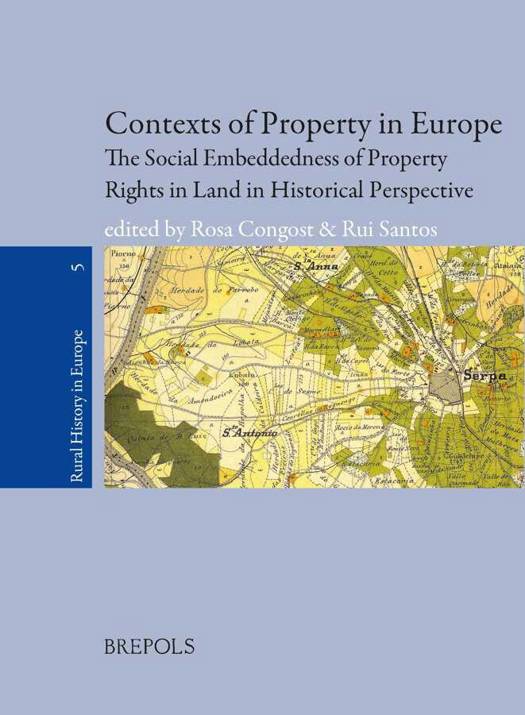
Rurhe 05 Contexts of Property: The Social Embeddedness of Property Rights to Land in Europe in Historical Perspective
The Social Embeddedness of Property Rights in Land in Historical Perspective
Rosa Congost
€ 53,00
+ 106 punten
Omschrijving
The essays in this book tap the potential of the historical analysis of social contexts in which property rights are embedded - social relations, power and agency, political institutions, culture - to understand how landed resources are actually appropriated. This exploratory approach seeks both to take advantage of the existing theory of property rights, as it is applied by the institutionalist outlook on economic history, and to go beyond it by explicitly incorporating social processes and factors in the analysis of property institutions. With this common aim in mind, the book covers a wide variety of historical cases throughout space and time, from the late Middle Ages in the Czech lands and in Tuscany to the very recent de-collectivisation of the countryside in former socialist countries, which will contribute rich and grounded insights to the discussion of the topic and of its implications.
Specificaties
Betrokkenen
- Auteur(s):
- Uitgeverij:
Inhoud
- Aantal bladzijden:
- 285
- Taal:
- Engels
- Reeks:
- Reeksnummer:
- nr. 5
Eigenschappen
- Productcode (EAN):
- 9782503532271
- Verschijningsdatum:
- 1/12/2009
- Uitvoering:
- Paperback
- Formaat:
- Trade paperback (VS)
- Afmetingen:
- 160 mm x 239 mm
- Gewicht:
- 430 g


Alleen bij Standaard Boekhandel
+ 106 punten op je klantenkaart van Standaard Boekhandel
Cadeau

AANGERADEN


Beoordelingen
We publiceren alleen reviews die voldoen aan de voorwaarden voor reviews. Bekijk onze voorwaarden voor reviews.