


- Afhalen na 1 uur in een winkel met voorraad
- Gratis thuislevering in België vanaf € 30
- Ruim aanbod met 7 miljoen producten
- Afhalen na 1 uur in een winkel met voorraad
- Gratis thuislevering in België vanaf € 30
- Ruim aanbod met 7 miljoen producten





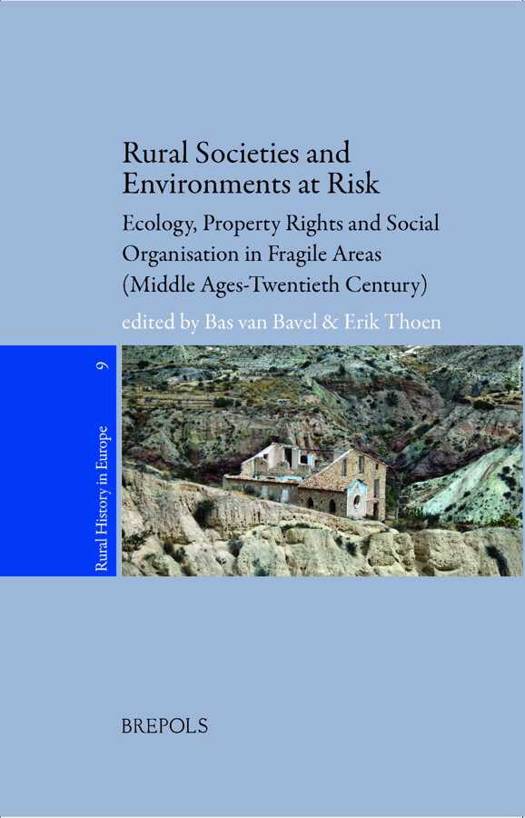
Rural Societies and Environments at Risk
Ecology, Property Rights and Social Organisation in Fragile Areas (Middle Ages-Twentieth Century)
Bas J.P. van Bavel
€ 90,10
+ 180 punten
Omschrijving
This book discusses the relationship between ecology and rural society in fragile environments of the past. Rural land use in these areas entailed an inherent vulnerability, for instance because of their poor soils, aridity or their location in mountain areas, near the sea or in severe climatic conditions. The various chapters analyse how societies coped with this vulnerability by way of the organization of property rights to land. These rights formed the framework which shaped the use of the land and were a main constituent of the relationship between mankind and ecology in these fragile areas. To a large extent, therefore, they determined - and still determine - the success or failure of rural societies to cope with the challenges posed by their environment. In their turn, however, these property rights were shaped within a wider social and political context, in which political and ideological considerations, and special interests, also played their part. As a result, the organization of these rights was not always geared towards sustainability, as demonstrated in these chapters, which discuss and analyse long-term developments in several parts of Northwestern, Central and Southern Europe. Bas van Bavel is professor of economic and social history of the Middle Ages, head of the section of Economic and Social History, and coordinator of the knowledge centre Institutions of the Open Society at Utrecht University (the Netherlands). Erik Thoen is ordinary professor at Ghent University (Belgium) specialised in rural and environmental history. He is co-ordinator of the CORN history network (Comparative Rural History of the North Sea Area).
Specificaties
Betrokkenen
- Auteur(s):
- Uitgeverij:
Inhoud
- Aantal bladzijden:
- 329
- Taal:
- Engels
- Reeks:
- Reeksnummer:
- nr. 9
Eigenschappen
- Productcode (EAN):
- 9782503544168
- Verschijningsdatum:
- 20/03/2013
- Uitvoering:
- Paperback
- Formaat:
- Trade paperback (VS)
- Afmetingen:
- 155 mm x 234 mm
- Gewicht:
- 566 g


Alleen bij Standaard Boekhandel
+ 180 punten op je klantenkaart van Standaard Boekhandel
Cadeau

AANGERADEN


Beoordelingen
We publiceren alleen reviews die voldoen aan de voorwaarden voor reviews. Bekijk onze voorwaarden voor reviews.