


- Afhalen na 1 uur in een winkel met voorraad
- Gratis thuislevering in België vanaf € 30
- Ruim aanbod met 7 miljoen producten
- Afhalen na 1 uur in een winkel met voorraad
- Gratis thuislevering in België vanaf € 30
- Ruim aanbod met 7 miljoen producten





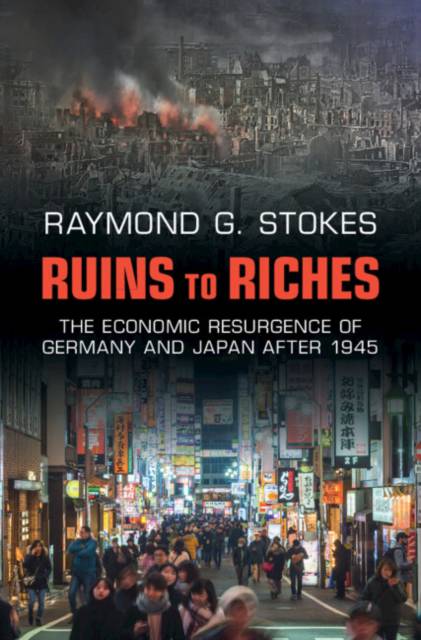
Ruins to Riches
The Economic Resurgence of Germany and Japan After 1945
Raymond G Stokes
Hardcover | Engels
€ 57,95
+ 115 punten
Omschrijving
In 1945, Germany and Japan lay prostrate after total war and resounding defeat. By 1960, they had the second and fifth largest economies in the world respectively. This global leadership has been maintained ever since. How did these 'economic miracles' come to pass, and why were these two nations particularly adept at achieving them? Ray Stokes is the first to unpack these questions from comparative and international perspectives, emphasising both the individuals and companies behind this exceptional performance and the broader global political and economic contexts. He highlights the potent mixtures in both countries of judicious state action, effective industrial organisation, benign labour relations, and technological innovation, which they adapted constantly - sometimes painfully - to take full advantage of rapidly growing post-war international trade and globalisation. Together, they explain the spectacular resurgence of Deutschland AG and Japan Incorporated to global economic and technological leadership, which they have sustained to the present.
Specificaties
Betrokkenen
- Auteur(s):
- Uitgeverij:
Inhoud
- Aantal bladzijden:
- 345
- Taal:
- Engels
Eigenschappen
- Productcode (EAN):
- 9781316514528
- Verschijningsdatum:
- 9/05/2024
- Uitvoering:
- Hardcover
- Formaat:
- Genaaid
- Afmetingen:
- 155 mm x 231 mm
- Gewicht:
- 703 g


Alleen bij Standaard Boekhandel
+ 115 punten op je klantenkaart van Standaard Boekhandel
Cadeau

AANGERADEN


Beoordelingen
We publiceren alleen reviews die voldoen aan de voorwaarden voor reviews. Bekijk onze voorwaarden voor reviews.