


- Afhalen na 1 uur in een winkel met voorraad
- Gratis thuislevering in België vanaf € 30
- Ruim aanbod met 7 miljoen producten
- Afhalen na 1 uur in een winkel met voorraad
- Gratis thuislevering in België vanaf € 30
- Ruim aanbod met 7 miljoen producten





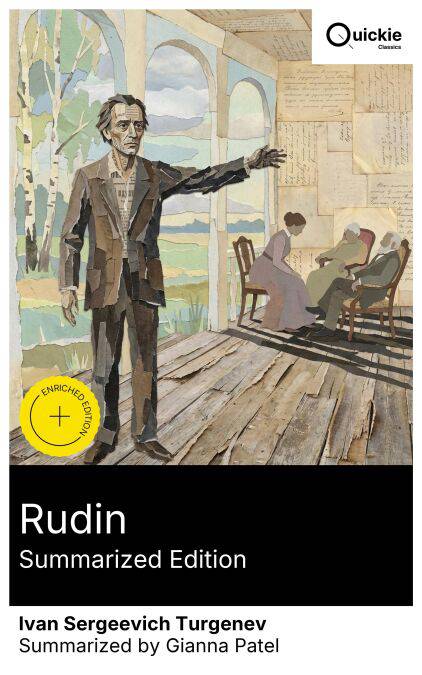
Rudin (Summarized Edition) E-BOOK
Enriched edition. An idealist's struggle in 19th-century Russia—social critique, realism, and the intelligentsia's tensions between idealism and pragmatism
Ivan Sergeevich Turgenev
E-book | Engels
€ 1,99
+ 1 punten
Omschrijving
Rudin (1856) inaugurates Turgenev's gallery of the "superfluous man," portraying the eloquent yet ineffectual Dmitrii Rudin on a provincial estate. With limpid, economical prose, shaded dialogue, and lyrical landscapes, Turgenev stages the clash between idealism and action, reason and feeling. Salon debates, a restrained love plot, and a quietly devastating farewell distill the intellectual atmosphere of the 1840s, when Westernizing ideas unsettled gentry routines. Classical design and psychological tact mark a mature, understated realism. Ivan Sergeevich Turgenev—educated in Moscow, St. Petersburg, and Berlin—combined European intellectual training with intimate knowledge of gentry estates and serfdom. Encounters with reformist circles and periods of enforced residence in the country honed his portrait of the "men of the forties," brilliant talkers disabled by circumstance and temperament. Rudin is often read as a composite of that cohort, sometimes linked to figures like Bakunin or Granovsky, filtered through Turgenev's humane skepticism. Readers of nineteenth‑century realism and Russian intellectual history will find in Rudin a compact, lucid meditation on promise and failure. It rewards close reading and invites debate about charisma, responsibility, and the costs of ideas.
Quickie Classics summarizes timeless works with precision, preserving the author's voice and keeping the prose clear, fast, and readable—distilled, never diluted. Enriched Edition extras: Introduction · Synopsis · Historical Context · Author Biography · Brief Analysis · 4 Reflection Q&As · Editorial Footnotes.
Quickie Classics summarizes timeless works with precision, preserving the author's voice and keeping the prose clear, fast, and readable—distilled, never diluted. Enriched Edition extras: Introduction · Synopsis · Historical Context · Author Biography · Brief Analysis · 4 Reflection Q&As · Editorial Footnotes.
Specificaties
Betrokkenen
- Auteur(s):
- Vertaler(s):
- Uitgeverij:
Inhoud
- Aantal bladzijden:
- 85
- Taal:
- Engels
Eigenschappen
- Productcode (EAN):
- 8596547883203
- Verschijningsdatum:
- 9/01/2026
- Uitvoering:
- E-book
- Beveiligd met:
- Digital watermarking
- Formaat:
- ePub


Alleen bij Standaard Boekhandel
+ 1 punten op je klantenkaart van Standaard Boekhandel
Cadeau

AANGERADEN


Beoordelingen
We publiceren alleen reviews die voldoen aan de voorwaarden voor reviews. Bekijk onze voorwaarden voor reviews.