


- Afhalen na 1 uur in een winkel met voorraad
- Gratis thuislevering in België vanaf € 30
- Ruim aanbod met 7 miljoen producten
- Afhalen na 1 uur in een winkel met voorraad
- Gratis thuislevering in België vanaf € 30
- Ruim aanbod met 7 miljoen producten





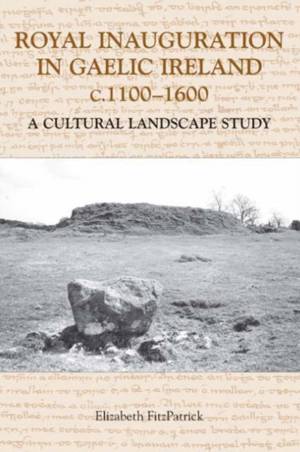
Royal Inauguration in Gaelic Ireland C.1100-1600: A Cultural Landscape Study
Elizabeth Fitzpatrick
€ 209,45
+ 418 punten
Omschrijving
This investigation considers the places on the Irish landscape where open-air Gaelic royal inauguration assemblies were held in the period c. 1100-1600. Specially designated inauguration sites played an important role in the political life of Gaelic lordships in later medieval Ireland. Gaelic ruling families often appropriated prehistoric ritual landscapes for their royal assemblies in order to attach the pedigree of a royal candidate to an illustrious past; such sites might be an alleged burial place of an eponymous ancestor or a legendary heroic figure, or an ancient landscape associated with renowned events. This study of their physical appearance, place-names, and geographical and historical contexts ranges over all the archaeological sites identified as inauguration places - enclosures, sepulchral mounds, natural places, ringforts and churches, and associated inauguration furniture in the form of 'leaca' and stone thrones, basin stones and sacred trees. Irish royal assembly places and practices are viewed in relation to sites elsewhere in Britain and greater Europe, and the circumstances that brought about the ending of the Gaelic practice of inauguration are also considered. ELIZABETH FitzPATRICK is Lecturer in Medieval Archaeology, National University of Ireland, Galway.
Specificaties
Betrokkenen
- Auteur(s):
- Uitgeverij:
Inhoud
- Aantal bladzijden:
- 320
- Taal:
- Engels
- Reeks:
- Reeksnummer:
- nr. 22
Eigenschappen
- Productcode (EAN):
- 9781843830900
- Verschijningsdatum:
- 15/09/2002
- Uitvoering:
- Hardcover
- Formaat:
- Genaaid
- Afmetingen:
- 165 mm x 238 mm
- Gewicht:
- 784 g


Alleen bij Standaard Boekhandel
+ 418 punten op je klantenkaart van Standaard Boekhandel
Cadeau

AANGERADEN


Beoordelingen
We publiceren alleen reviews die voldoen aan de voorwaarden voor reviews. Bekijk onze voorwaarden voor reviews.