



Je cadeautjes zeker op tijd in huis hebben voor de feestdagen? Kom langs in onze winkels en vind het perfecte geschenk!
- Afhalen na 1 uur in een winkel met voorraad
- Gratis thuislevering in België vanaf € 30
- Ruim aanbod met 7 miljoen producten
Je cadeautjes zeker op tijd in huis hebben voor de feestdagen? Kom langs in onze winkels en vind het perfecte geschenk!
- Afhalen na 1 uur in een winkel met voorraad
- Gratis thuislevering in België vanaf € 30
- Ruim aanbod met 7 miljoen producten





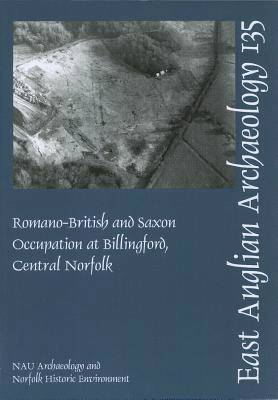
Romano-British and Saxon Occupation at Billingford, Central Norfolk
Heather Wallis
€ 43,45
+ 86 punten
Omschrijving
This book describes excavations undertaken at Billingford by the Norfolk Archaeological Unit, ahead of gravel extraction in the 1990s. The excavations were located on the periphery of a Romano-British small town, the centre of which, as identified from aerial photography, lies north of the excavated area. Activity during the prehistoric period was represented by a few artefacts and features but the Romano-British period was that of greatest activity, with evidence for ditches forming field boundaries and driveways, pits and post-holes, a road and an inhumation cemetery. The road ran from the centre of the settlement towards the 1st-century fort at Swanton Morley. This along with some finds associated with the military suggests that during the early part of the Romano-British period, the fort and town were inter-related. The cemetery, of which only part was disturbed, is the largest Romano-British burial ground excavated in Norfolk. Within the graves, skeletons survived only as sand bodies and dating evidence was scarce, although there are indications that the cemetery continued in use into the early 5th century. Later activity, although not extensive, was significant. Four Early Saxon buildings were excavated, three of post-hole construction and the other a sunken-featured building. Middle Saxon activity associated with iron smelting was present, including evidence of a "north-German-type" furnace.
Specificaties
Betrokkenen
- Auteur(s):
- Uitgeverij:
Inhoud
- Aantal bladzijden:
- 112
- Taal:
- Engels
- Reeks:
- Reeksnummer:
- nr. 135
Eigenschappen
- Productcode (EAN):
- 9780905594521
- Verschijningsdatum:
- 28/04/2011
- Uitvoering:
- Paperback
- Formaat:
- Trade paperback (VS)
- Afmetingen:
- 208 mm x 295 mm
- Gewicht:
- 430 g


Alleen bij Standaard Boekhandel
+ 86 punten op je klantenkaart van Standaard Boekhandel
CADEAU


Beoordelingen
We publiceren alleen reviews die voldoen aan de voorwaarden voor reviews. Bekijk onze voorwaarden voor reviews.