


- Afhalen na 1 uur in een winkel met voorraad
- Gratis thuislevering in België vanaf € 30
- Ruim aanbod met 7 miljoen producten
- Afhalen na 1 uur in een winkel met voorraad
- Gratis thuislevering in België vanaf € 30
- Ruim aanbod met 7 miljoen producten





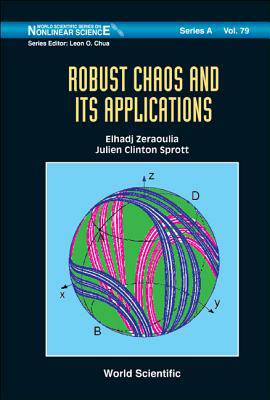
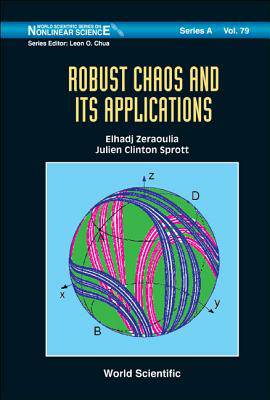
Robust Chaos and Its Applications
Elhadj Zeraoulia
€ 259,45
+ 518 punten
Omschrijving
Robust chaos is defined by the absence of periodic windows and coexisting attractors in some neighborhoods in the parameter space of a dynamical system. This unique book explores the definition, sources, and roles of robust chaos. The book is written in a reasonably self-contained manner and aims to provide students and researchers with the necessary understanding of the subject. Most of the known results, experiments, and conjectures about chaos in general and about robust chaos in particular are collected here in a pedagogical form. Many examples of dynamical systems, ranging from purely mathematical to natural and social processes displaying robust chaos, are discussed in detail. At the end of each chapter is a set of exercises and open problems (more than 260 in the whole book) intended to reinforce the ideas and provide additional experiences for both readers and researchers in nonlinear science in general, and chaos theory in particular.
Specificaties
Betrokkenen
- Auteur(s):
- Uitgeverij:
Inhoud
- Aantal bladzijden:
- 472
- Taal:
- Engels
- Reeks:
- Reeksnummer:
- nr. 79
Eigenschappen
- Productcode (EAN):
- 9789814374071
- Verschijningsdatum:
- 28/10/2011
- Uitvoering:
- Hardcover
- Formaat:
- Genaaid
- Afmetingen:
- 157 mm x 229 mm
- Gewicht:
- 839 g


Alleen bij Standaard Boekhandel
+ 518 punten op je klantenkaart van Standaard Boekhandel
Cadeau

AANGERADEN


Beoordelingen
We publiceren alleen reviews die voldoen aan de voorwaarden voor reviews. Bekijk onze voorwaarden voor reviews.